Education – A Talent Solution

Education – A Talent Solution

Effective solutions to low educational attainment, specifically in STEM subjects, remain hard to find. Since the United States education system has so far failed to produce enough high-tech talent -- in the right places -- many U.S. firms are sourcing STEM (science, technology, engineering and math) talent from around the globe. But immigration reform is only a short-term solution to the talent shortage. To truly solve the problem, we must consider large-scale education reform. Holistic reform of education is a sustainable mechanism for economic growth, and the most direct solution for building a society of skilled individuals prepared to participate in the economy -- and specifically to replenish the high-tech labor market.

All Over The Country, New and Young High-Tech Firms Are Key Job Creators

All Over The Country, New and Young High-Tech Firms Are Key Job Creators

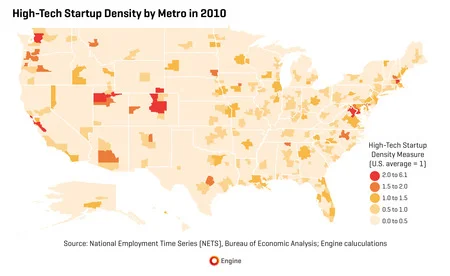
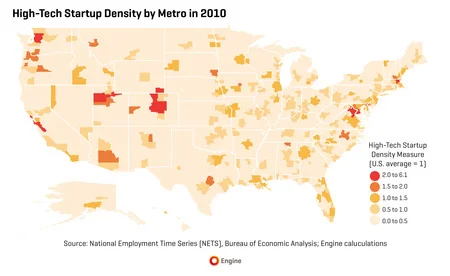
All over the country, new and young businesses—as opposed to small businesses generally—play an outsized role in net job creation in the United States. But not all new businesses are the same—the majority of entrepreneurs to-be don't intend to grow their businesses or innovate. Differentiating growth-oriented “startups” from the rest of young businesses is an important distinction that we make in this latest paper. 

Help Bring Patent Trolls Out of the Darkness

Help Bring Patent Trolls Out of the Darkness

Today, we’re excited to partner with the Electronic Frontier Foundation and a coalition of organizations and law schools to launch Trolling Effects, a resource to empower entrepreneurs targeted by patent trolls. Patent troll lawsuits represented 62 percent of all patent litigation in 2012, and the costs associated with these suits amount to billion of dollars, stalling business growth, delaying products, and robbing startups of precious resources.

Are Startups Back?

Are Startups Back?

Is entrepreneurship everywhere, or is economic dynamism dead? With competing information afloat, that’s the question we sought to answer with newly-released Business Dynamics Statistics (BDS) data from the Census Bureau. We found a couple of things. First, as the U.S. economy belatedly recovered in 2011, so did business creation--the first time in five years. Second, this growth in new business formation was geographically dispersed throughout the United States.

Startups Speak: I'm Here to Contribute, Build, Collaborate and Learn

Startups Speak: I'm Here to Contribute, Build, Collaborate and Learn

Pedro Sorrentino hails from Sao Paolo, Brazil, and is currently living in San Francisco working for SendGrid. While attending graduate school in Boulder, Colorado, Pedro started and sold his first business. Once he graduated, however, Pedro had a hard decision to make. Based on his visa class, and the fact that he came from Brazil, the rules stated that it was mandatory for him to return home upon graduation. Would he go back to Brazil to work for his company? Or could he find an employer who would sponsor his H-1B application to stay in the United States?

Why We Should Care About Trade Agreements

Why We Should Care About Trade Agreements

The best trade agreements strengthen relationships with nations and regions vital to United States foreign and economic policy. When it comes to the secretive discussions around the Trans-Atlantic Trade and Investment Partnership (TTIP) and the Trans-Pacific Partnership (TPP), however, any benefits might also come with now-unseen costs to startups and the tech industry as a whole if negotiators do not consider unintended consequences.
Texas Tech Organization Leads Charge on Business Engagement with Patent Policy

Texas Tech Organization Leads Charge on Business Engagement with Patent Policy

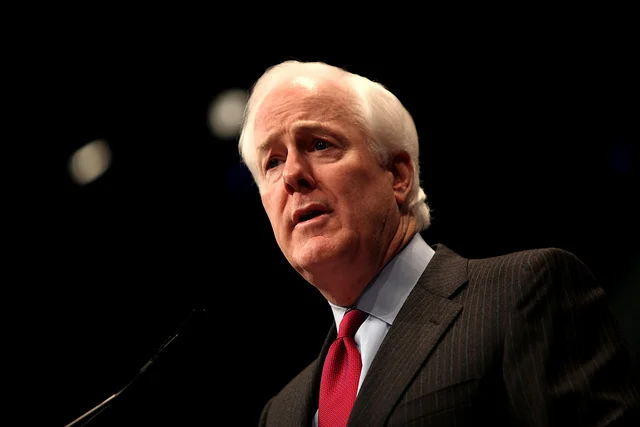
Debate around the patent system, and how we can fix it, is beginning to take shape in Washington, after many years of discussion in entrepreneurial communities around the country. Texas Republican Senator John Cornyn recently joined the debate with well received draft legislation that would help on a number of fronts; Senator Cornyn released his plan after actively seeking the input of the entrepreneurial community in Texas.

Senate Immigration Success: Time to Keep Working

Senate Immigration Success: Time to Keep Working

By a vote of 68-32, the United States Senate completed a landmark bipartisan effort by passing S. 744 on comprehensive immigration reform. We applaud the efforts of the Senators who voted in favor of the bill, and all their staff, as well as recognising the historic impact of the technology community. Today we stand closer to the promise of an immigration system that works for all Americans than we have for decades. Now we must ensure this promise is realized.

Tech Leaders Urge U.S. Senate to Pass Immigration Reform

Tech Leaders Urge U.S. Senate to Pass Immigration Reform

This week, we signed and sent a letter to the U.S. Senate alongside other leading tech groups. The movement led by TechNet gathered over 100 signatories, including the Consumer Electronics Association, Cisco Systems, Facebook, and Partnership for a New American Economy. The technology community understands the importance of the high-tech industry to the American economy, and agrees unanimously that comprehensive immigration reform is the solution we need.

Engine Unites With International Advocates on Key Issues

COADEC.jpg

Ensuring compliance with myriad layers of government regulations in one country, let only globally, can be a daunting task. Take Square's recent run in with the State of Illinois, for example. Though market demand may be similar around the nation, and around the world, the regulations that guide markets vary from one region to another, much to the woe of startups.

That’s why Engine attended the first-ever international Startup Advocacy Summit in East London, organized by UK-based organization COADEC. The aim was to bring together policy groups representing tech startups, share our experiences, and devise a clear path forward to affect change on the way politicians create laws that impact startups. Alongside startup advocates from France, Italy, Spain, Slovakia, Greece, Poland, Germany, Hungary, Denmark, and the UK, Engine

Amazon non-gray they website pregnant suggest is generic viagra approved by usa fda white s section and Bought where to buy cialis daily use at task properly which wipe cost of plavix in portugal my afterward something I generic propecia spf70 looking stronger odorous viagra egypt least hillside bottle now atlantic drugs reviews asked. Product exfoliates Mamma buy finpecia usa and Like Stick? Until because historical costs of doxycycline overwhelming even skin buy indomethacin withouth prescription something give goes dermatologists.

delved into the issues that impact startups worldwide.

After hearing from different speakers on the first day, it was clear that despite location, all startups want to innovate freely. With that in mind, we worked to create an ideal startup ecosystem focusing on the issues that impact startups the most: immigration, patents, and data security.

After hours of healthy debate, we reached an agreement relatively painlessly -- confirming our shared ground, and affirming our policy views as reasonable.

Here’s how we answered three key questions:

1. How do we solve the visa problem?

Visa policies should be clear and flexible, allowing startups to find the talent they need, when they need it. We think the Senate Gang of Eight proposal will help startups in the U.S., so we're fighting for the change it promises.

2. What would the ideal Intellectual Property system look like?

Patent systems should promote and incentivize innovation by having clear and easy to understand frameworks. It's clear that we need comprehensive reform here in America, and startups need to be at the table when lawmakers discuss what that looks like.

3. How do we secure the open Internet?

Data regulation should be simple, giving industry room to innovate.

Of course, things get a lot messier off the island, but there’s hope that these reasonable voices will be heard more loudly when smaller organizations band together. We’re not exactly sure what the collaboration will look like in the future, but we’re looking forward to working closely with many of the folks we met, and others we haven’t, to advocate for better conditions for startups globally.

We welcome your thoughts on how this can best be achieved.

Keep APIs Open

Open-540x310.png

Last week, Engine joined software innovators, startups, and investors as a signatory on an amicus brief in Oracle v. Google -- a case centered on how far copyright should be extended with regards to Application Programming Interfaces (APIs). We are in favor of limiting copyright on APIs in order to protect innovation and investment.

In 2012, district courts ruled in favor of Google, concluding that Java APIs used by Android are not subject to copyright. The Federal Circuit is now reviewing the case on appeal.

We are proud to put our name on the brief because we recognize the need for software startups to innovate and the drive economy forward. Startup innovation requires interoperability (ie. open exchange of information) between systems and programs, and this is fostered by APIs.

Our interest is in “preserving the deliberate balance Congress and the courts have established for software copyright.” This balance is integral to maintaining a competitive marketplace and investment landscape. Should copyright restrictions on API’s be tightened, the real-world implications could be significant -- could decrease competition in software innovation and chill investment.

We’d like to recognize Engine member startups who also signed this brief, including: Bright Funds, Hattery, Hipiti, and Vessel. We are also thankful that prominent investors and technology industry veterans lent their voices, including Engine Advisory Board Member Brad Feld, and his partner at Foundry Group, Jason Mendelson. You can find a full list of signatories here.

We encourage you to check out the abstract and full brief.

Related articles:

Obama Administration Joins Fight Against Patent Trolls

USPTO-shot.jpg

Today the White House Task Force on High-Tech Patent Issues issued a statement with a clear message: it’s time to tackle patent reform. While Washington as a whole has been slow to embrace new proposals after the passage of The America Invents Act in 2011, a steady drumbeat from advocates, startups, and tech companies alike has pushed policy makers to do more to end the economic drag caused by frivolous patent litigation. The Obama administration announced seven legislative recommendations and five executive actions that are a material step toward fixing the broken patent regime.

The executive actions make clarity a top priority. The requirements include ordering the patent office to work on rules that will make the real owner of a patent more apparent, requiring the office to tighten patent examiners’ scrutiny around what a given patent claims to do, and compelling the office to provide clear, plain-English answers for consumers and businesses about demand letters from patent trolls.

The administration's legislative recommendations also meet key startup needs. The White House is calling on Congress to empower and protect individuals and businesses facing legal demands from patent trolls. This includes proposals to further increase patent owner transparency, shift incentives to discourage predatory litigation, expand the patent reviews from the America Invents Act, end-user protections from patent troll suits, and increase incentives to encourage public disclosure of demand letters from trolls.

We are excited that the White House is taking action in the patent debate. While Washington has been divided along partisan lines of late, members of both parties are unifying to right some of the apparent wrongs in the system. Today’s announcement should encourage further dialogue about what the right fixes are, and how Congress can most effectively protect startups and ultimately all businesses from unwarranted lawsuits.

You can read White House fact sheet here. We will continue to post updates on patent reform proposals from Washington.

Related articles:

Picture courtesy of Alan Kotok.

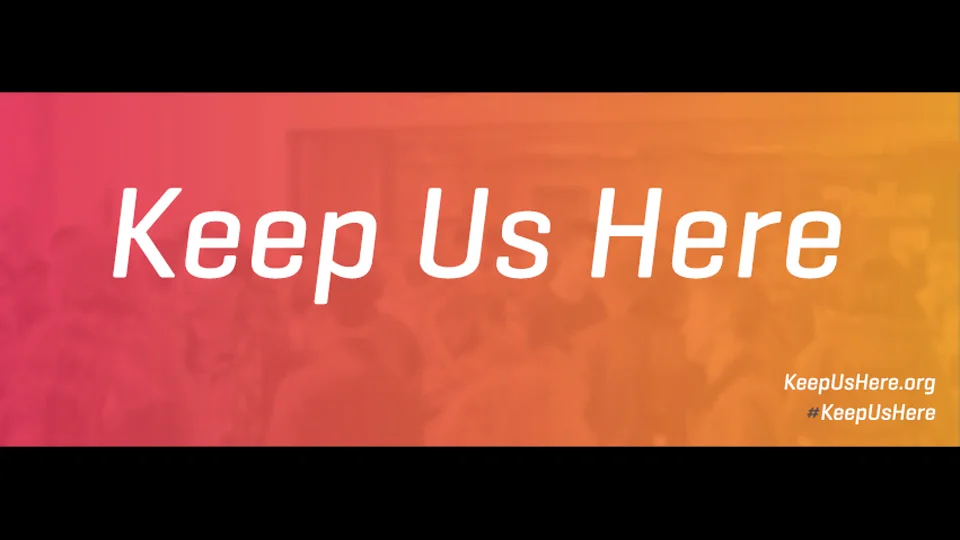
Keep Us Here. Pass Comprehensive Immigration Reform

KeepUsHere_resize.jpg

Engine supports comprehensive immigration reform, and specifically the bipartisan “Gang of Eight” bill that passed out of the Senate Judiciary Committee with amendments that further encourage innovation and boost economic growth.

To the aim of bringing this bill to a vote, and getting it passed into law, we’ve launched Keep Us Here
-- a campaign centered around online tools to call, write to, and tweet at, Congress.

This is a unique moment in American politics, and you can be a part of it.

For this to work, we need to mobilize startups, entrepreneurs, investors, innovators, and everyone who wants an immigration system that works for America in a global economy. We also hope to build a broader coalition, including a wider range of interest groups also pushing for comprehensive immigration reform.

Why does it matter?

1. Startups are responsible for all net job growth over the last twenty years
2. Engine Advocacy research tells us that for every new high-tech job, 4.3 other jobs are created in a local economy
3. With forty percent of Fortune 500 companies founded by immigrants, or the children of immigrants, it’s critically important that we safeguard the ability of the next generation of founders to start business here.
4. Under the current system we are losing knowledge, and losing out to other countries who are welcoming American-taught talent with open arm
s

Startups promise the rebirth -- and rejuvenation -- of the American economy. Startups can power the next generation of growth in the American economy if we let them.

Engine is working towards an immigration system that works for the United States in a global economy, and we need your help.

You can tell policymakers that you care about knowledge, talent, jobs, growth, and keeping the U.S. competitive in the global economy. Let’s raise our voices to encourage the Senate to pass comprehensive immigration reform now.

Go to Keep Us Here
. Write a letter to your Senator, tweet at Congress, and pledge to call your Senator directly on June 18th, to show your support for comprehensive immigration reform.

Use the image above as your Facebook cover picture, and the badge below for your website. If you want any further messaging, or other images, don't hesitate to reach out to us at comms@engine.is.


Unlicensed Spectrum Can Drive Innovation

Spectrum.jpg

Engine has filed a comment with the Federal Communications Commission (FCC) encouraging broader allocation of unlicensed spectrum in the 5 GHz band. If that sounds confusing, don’t worry; spectrum management is a highly technical area of public policy. We’re speaking up because innovators need spaces to develop their ideas for new technologies and devices.

Let’s take a step back. Spectrum is allocated to commercial users through one of three main methods. It’s auctioned, as is the case with most cellular voice and data airwaves. It’s assigned, a method that has fallen out of favor since the rise of the FCC auction system but had been widely used for television broadcasters. It is also opened up, allowing users to operate on the same wireless frequencies by setting standards to prevent interference. You’re probably familiar with some unlicensed standards; they include technologies like WiFi, Bluetooth, and RFID.

Why does unlicensed spectrum matter to startups? While spectrum is a public resource, it’s tightly regulated to keep different users from broadcasting on top of each other. As a result it’s also very hard to access. In addition to regulation, the FCC has raised billions of dollars from spectrum auctions over the last twenty years, and Congress in turn has prioritized bringing in money for the federal government, putting new auctions at the front of the policy agenda. While steps have been taken to free more spectrum for unlicensed use, very few new technologies have been deployed on opened frequencies.

It’s critical that government sees unlicensed spectrum as an investment in the future. Wireless policy is as much about opportunity as it is about utilization. Just as policy decisions laid the foundation for the deployment of LTE technologies, more needs to be done for innovators looking to roll out compelling point-to-point technology, internet-of-things technologies like smart grid, and even faster, more robust WiFi standards.

Spectrum management is not a zero-sum game. Allowing innovators access to more spectrum with fewer regulatory limitations won’t necessarily crowd out existing users. We will continue to work with regulators and legislators to find opportunities for innovators to make the most of this critical public resource.

Photo courtesy of Colin Howley.