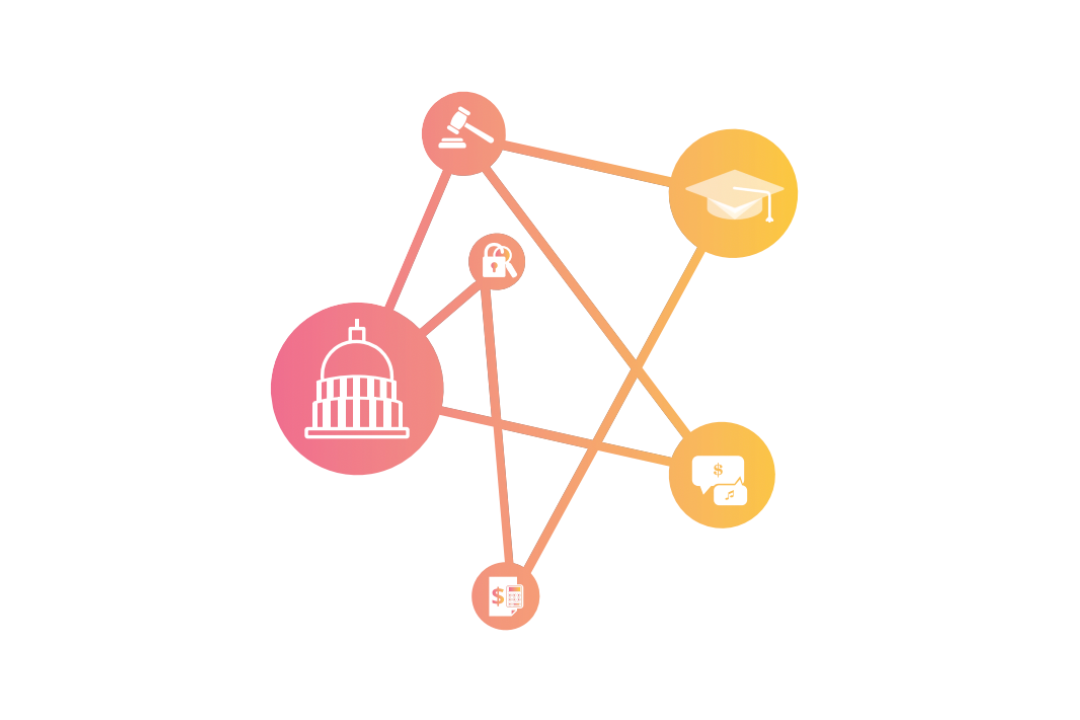

Startups in our network are developing and using AI for a wide range of uses, making them important stakeholders in nearly every policy conversation on AI. For startups, all policy impacts their competitiveness. That’s especially true for AI. From capital access, to talent & immigration, to IP frameworks, to government resources—and especially the regulatory environment—all of it impacts AI startups’ success and ability to innovate.
Artificial intelligence is a foundational technology driving innovation in every corner of the economy.
In every corner of the economy, there is a flourishing ecosystem of startups building AI, building with AI, and using AI to better everyday tasks. Some startups are building their own machine learning models to perform specific tasks. Most startups, though, are leveraging foundation models—either by licensing from market leaders or accessing open source—to fine-tune and build unique products.
If data and compute are integral to AI innovation, then the facilities that house those resources play an obvious central role and are essential to understand as well.
Nearly all state legislatures adjourned for the year, and they took several notable steps impacting startups and AI, putting forward over 1000 bills related to the technology.
As states revisit AI rules, innovation advocates warn of unintended consequences
Court risks setting precedent for staggering damages in AI copyright case
This spring, antitrust enforcement agencies have been busy in the courtroom with cases that will impact far beyond the large tech company defendants.
Lawmakers are advancing proposals that would require startups to disclose detailed information about their AI training data, specifically the sources and copyright status of the content used.
This blog continues our series called “AI Essentials,” which aims to bridge the knowledge gap surrounding AI-related topics. It discusses what a foundation model is, how startups are leveraging them to drive greater innovation in the AI ecosystem, and what policymakers need to keep in mind.
This blog continues our series called “AI Essentials,” which aims to bridge the knowledge gap surrounding AI-related topics. It discusses copyright infringement and fair use when it comes to the inputs used in AI training and why these legal questions are critical for the AI ecosystem and startup innovation.
Policymakers need to support pro-startup policy if they want a world leading AI ecosystem made up of U.S. companies building AI, building with AI, and using AI to better everyday tasks.
Artificial intelligence, innovation funding, spectrum left off of Congress’ 2024 to-do list
Data is a fundamental resource that powers all AI systems. There are different types of data that are utilized for different functions in AI development, and varying sources of that data.
Humans don’t make very good multitaskers, but the same isn’t true for AI
If you wanted to haul large amounts of water from a well, you would (at one point in history) need a resource, like a horse, to pull the load. You would measure how much weight the horse can pull per minute in terms of “horsepower.” In the world of AI, the resource required to make models work is compute, and it’s measured in FLOPS.
Developing AI is incredibly expensive, but that hasn’t stopped startups with limited resources from innovating in AI and creating new products to improve our lives or businesses through a process called fine-tuning.