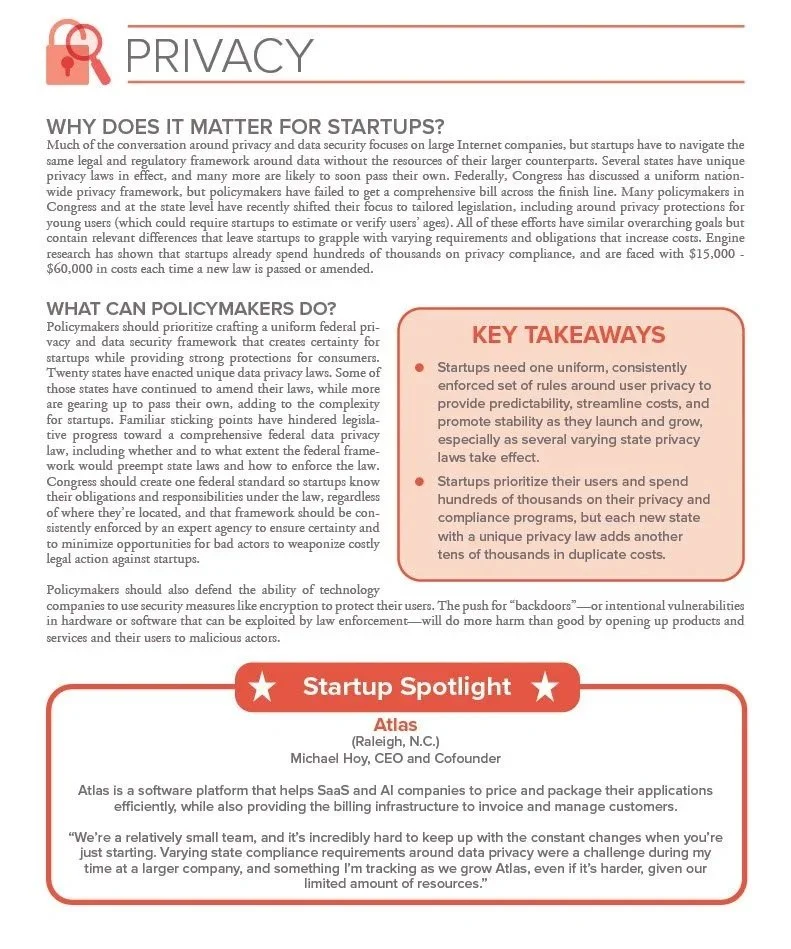
The responsible use and protection of user data is make-or-break for startups. If consumers lose trust in the Internet ecosystem, it’s the new, small startups longstanding reputations or massive legal teams that will suffer the most. As policymakers debate privacy protections, it’s crucial that they balance between meaningful privacy and data security protections and the ability of startups to innovate in ways that benefit their users.
To help policymakers better understand what these issues mean for startups and their users, we’re releasing an updated version of the report, one-pager, and video explainers of the impacts of age verification and the policy proposals that prompt it.
How determining user age impacts startups
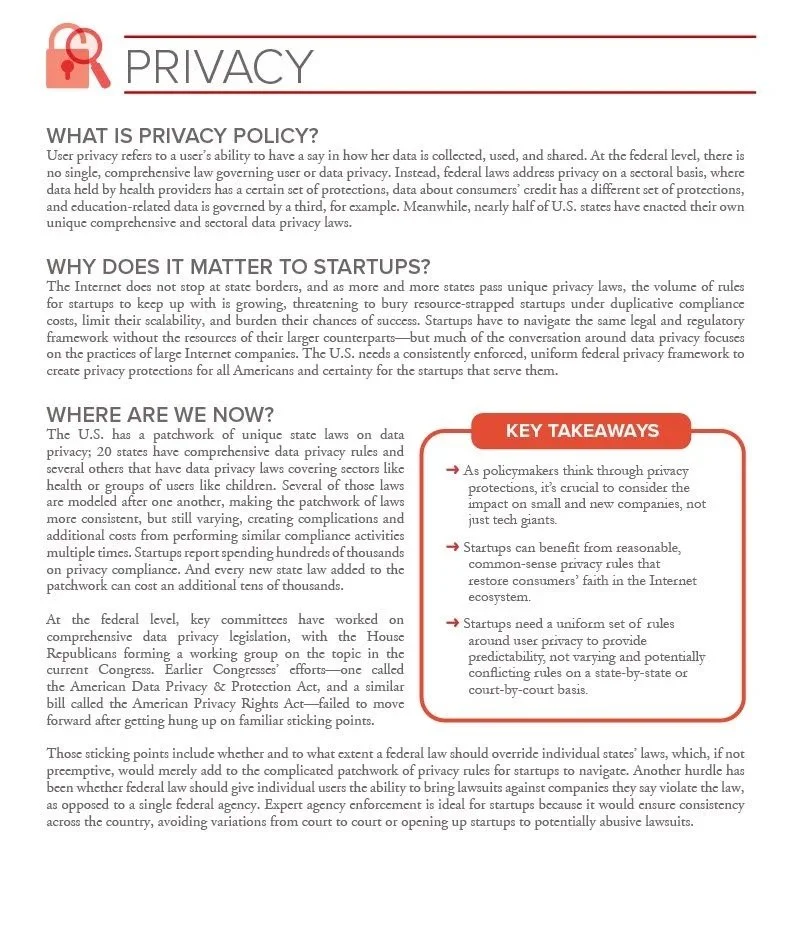
Data privacy has been top of mind for consumers, policymakers, regulators, companies, and entrepreneurs for the past several years, in the wake of broad privacy rules in the EU, and action in several U.S. states. The U.S., which has long had a sectoral approach to privacy, remains without a comprehensive privacy framework, and many states have reacted by proposing, passing, and implementing their own varying—and potentially conflicting—comprehensive privacy laws.
Despite how often we use encryption—and how prominent the encryption debate has become in policy circles—few understand how it actually works.
Whether it’s the European Union’s General Data Protection Regulation, or the looming California Consumer Privacy Act, policymakers across the world are grappling with what steps they can take to better safeguard consumers’ online data while promoting competition and innovation.
This week, a key House committee will consider a trove of online safety proposals, marking movement on one of the many intractable tech policy issues Congress perennially debates but rarely advances to the president’s desk. The proposed legislation comes with potential for a big impact on how startups design customer experiences, deliver their services, and interact with their users—regardless of those users’ ages.
Today, Engine published the 2026 Startup Policy Agenda, highlighting the policy issues coming up this year that will impact startups.
Lawmakers in Congress and in state legislatures are under pressure from parents and advocacy groups to change Internet law to “keep kids safe online”.
Engine released the 2025 Startup Policy Agenda showcasing how smart, thoughtful policy facilitates and encourages startup activity, leading to more innovation and more economic and job growth. The Agenda gives those working on policy an overview of the issues that are currently impacting—and the debates that stand to impact—startups.
Engine released the 2025 Startup Policy Playbook to give members of the startup ecosystem—founders, employees, investors, and support organizations—an overview of the policy conversations happening this year and how they can get involved in amplifying the startup voice. There’s lots to do, and lots to do better, and this playbook highlights why shaping innovation-friendly policies matters to startups.
Congressional Startup Day underscores importance of startups in policymaking
To help policymakers better understand what these issues mean for startups and their users, we’re releasing an updated version of the report, one-pager, and video explainers of the impacts of age verification and the policy proposals that prompt it.
Privacy bill stumbles, but startups still need a uniform federal framework
Startup founders come to D.C. calling for policies to enable innovation for all
Lawmakers lament detriment to startups of Trade Rep’s digital trade reversal
Congress is taking another crack at data privacy legislation, a universally regarded but elusive policy priority for lawmakers and industry alike.