
Stay up to date with
Engine’s weekly newsletter:
NEWS FEED

Startup News Digest 04/02/21
The Big Story: Biden unveils infrastructure plan with broadband, tax proposals. President Joe Biden announced an ambitious $2 trillion proposal this week that would rely on a combination of spending and tax credits to upgrade and expand the nation’s infrastructure. In addition to devoting billions of dollars towards upgrading schools, improving roads and bridges, and spurring a shift towards clean energy sources, the plan would also allocate $100 billion towards the expansion of broadband to narrow the nation’s digital divide. In a speech on Wednesday announcing his infrastructure plan, President Biden said the connectivity funding would “make sure every single American has access to high-quality, affordable high-speed Internet.”

As Global Fight Over Digital Services Taxes Heats Up, U.S. Startups Stand to Lose
TLDR: As federal officials seek public input regarding the response to countries that have enacted digital services taxes (DSTs) on U.S. Internet companies, the startup community remains concerned that they will be affected by the levies in the form of increased costs for the services and products they rely upon. While the Biden administration and global officials work to reach a uniform digital tax framework, it’s critical that countries—and even U.S. states—refrain from imposing their own digital services taxes that could harm startup formation and success.
As Policymakers Turn the Heat up on Tech Policy, Startups Need a Seat at the Table
In a new Medium post, Engine announced the launch of our Startup Agenda 2021, which outlines the policy priorities of the U.S. startup community. The Startup Agenda 2021 covers a range of policy issues that include capital access, connectivity, intellectual property, privacy, and more. As we explain in our post below, there are startups in every state and congressional district across the country, and their perspective is especially critical if policymakers hope to craft rules and regulations that boost innovation and competition.
Digital Services Taxes Will Harm Startups Across the World
TLDR: As intergovernmental organizations and countries continue to discuss implementing their own digital services tax (DST) frameworks on multinational Internet companies, France has notified large online platforms that they must begin paying the country’s levy this month while Canada recently announced plans to impose its own DST. Although most DSTs under consideration—as well as those that have already been implemented—target large, mostly U.S.-based tech companies, the startup community remains concerned that the burden of the taxes will be passed on to smaller companies and users in the form of increased costs for products and services.

Digital Services Taxes Will Increase Costs for Startups and Users
As the COVID-19 pandemic continues to cripple economic growth across the globe, the United States Trade Representative (USTR) and policymakers need to be prepared for trading partners seeking to recoup lost revenues through new international taxation measures. Specifically, more nations are considering implementing or have implemented digital services tax (DST) frameworks that would largely discriminatorily target U.S. tech companies to help cover budgetary shortfalls.
Startups Need Balanced Copyright Provisions in the U.S.-U.K. Trade Agreement
As negotiations continue on a trade deal between the United States and the United Kingdom, it is crucial that policymakers push for balanced and commonsense intellectual property frameworks around the world so that startups can grow globally. This July, the U.S. and the U.K. entered the third round of negotiations on an expected trade agreement, following the U.K.’s withdrawal from the European Union earlier this year. While a number of topics are on the table, including critical digital trade provisions, the intellectual property provisions will prove essential to U.S. startups.

Engine Applauds Signing of USMCA
The United States-Mexico-Canada Trade Agreement (USMCA) signed by President Donald Trump this morning is a welcome step for startups looking to innovate and grow on a global scale. USMCA has been hailed as a template for future trade agreements between the U.S. and other countries, and we’re pleased that the deal includes startup-friendly provisions that defend IP rights and promote intermediary liability protections.

Startups Won’t Be Immune From France’s Digital Services Tax
Engine submitted comments this week to the United States Trade Representative addressing the potential U.S. response to France’s enactment of a Digital Services Tax. The retroactive three percent tax would be levied on certain large firms providing online intermediation services and digital advertising sales with a revenue of 750 million euros globally and 25 million euros in France.
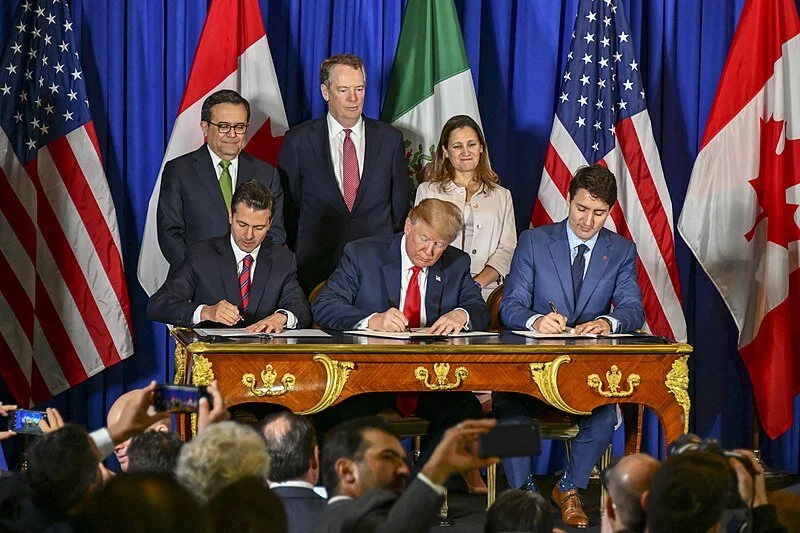
Trade agreements give startups certainty
When the United States negotiates trade agreements, it has the chance to give startups a similar legal framework abroad that they rely on domestically. This is critically important for smaller companies looking to effectively compete in an increasingly global ecosystem. While Congress still has the ability to update that digital legal framework as it sees fit, the inclusion of digital trade protections in trade agreements gives startups the certainty they need to compete globally.


Engine Supports Token Taxonomy Act
“The Token Taxonomy Act will help provide the regulatory clarity that the blockchain industry has needed for quite some time. This forward-thinking proposal succeeds in providing clear rules supporting an emerging technology without constraining future growth.”

Engine Supports the HALOS Act
Evan Engstrom, Engine's Executive Director, penned a letter to House Speaker Nancy Pelosi (D-Calif.) and House Minority Leader Kevin McCarthy (R-Calif.) expressing support for the HALOS Act.

Primer: Online Sales Tax
A primer about online sales taxes and why they matter to startups.

Modernized Trade Deals Need Pro-Startup Policies
If the U.S. is going to “modernize” its trade agreements, we need to make sure the deals take into account the startup ecosystem that makes up so much of our 21st century economy.

Engine Welcomes Reintroduction of Stock Options Legislation
Engine applauds the reintroduction of the Empowering Employees through Stock Ownership (EESO) Act, bipartisan legislation that will make it easier for startup employees to exercise their stock options.

Engine Welcomes House Passage of Stock Options Legislation
Today, the U.S. House of Representatives passed the Empowering Employees through Stock Ownership Act (H.R.5719), which will encourage startup growth by making it easier for employees at private companies to exercise their stock options. The following statement can be attributed to Engine Executive Director Evan Engstrom:

Let’s Make It Easier for Startup Employees to Exercise Their Options
Equity compensation, often in the form of stock options, is a critical tool used by startups to attract, retain, and incentivize quality employees. But stock options have a downside: current tax law requires that employees pay an immediate tax when they exercise their options, usually long before they can sell those stocks to realize their full economic value. Fortunately, a bill being considered today by the House Ways and Means Committee could remedy this problem.

One Way Stock Options Are Hurting Businesses – And How to Fix It
Among the many challenges entrepreneurs face in launching and scaling a startup, recruiting talented employees is one of the most difficult. There’s already a shortage of tech workers in this country (there are currently more than 600,000 open computing jobs nationwide, and last year, only 43,000 students graduated with computer science degrees), and it’s even more dire for startups that must compete with some of the most successful companies in the world to recruit these employees.