
Stay up to date with
Engine’s weekly newsletter:
NEWS FEED

Engine Applauds Signing of USMCA
The United States-Mexico-Canada Trade Agreement (USMCA) signed by President Donald Trump this morning is a welcome step for startups looking to innovate and grow on a global scale. USMCA has been hailed as a template for future trade agreements between the U.S. and other countries, and we’re pleased that the deal includes startup-friendly provisions that defend IP rights and promote intermediary liability protections.

Startups Won’t Be Immune From France’s Digital Services Tax
Engine submitted comments this week to the United States Trade Representative addressing the potential U.S. response to France’s enactment of a Digital Services Tax. The retroactive three percent tax would be levied on certain large firms providing online intermediation services and digital advertising sales with a revenue of 750 million euros globally and 25 million euros in France.
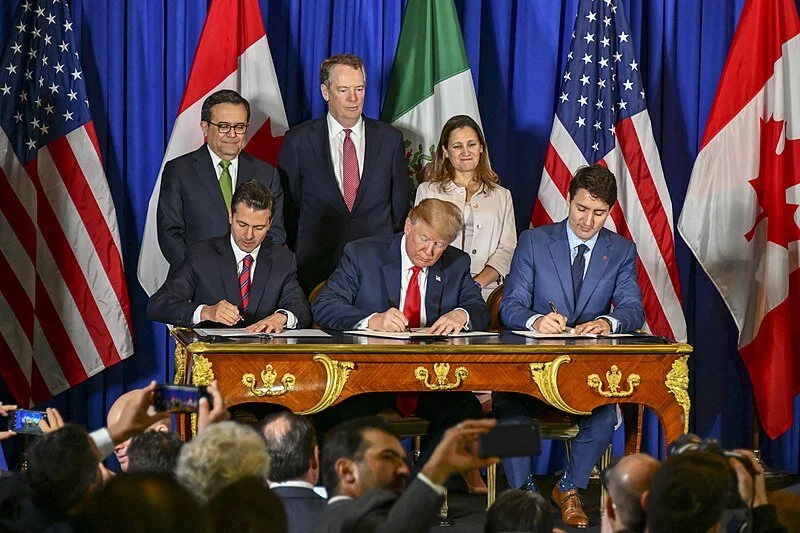
Trade agreements give startups certainty
When the United States negotiates trade agreements, it has the chance to give startups a similar legal framework abroad that they rely on domestically. This is critically important for smaller companies looking to effectively compete in an increasingly global ecosystem. While Congress still has the ability to update that digital legal framework as it sees fit, the inclusion of digital trade protections in trade agreements gives startups the certainty they need to compete globally.


Engine Supports Token Taxonomy Act
“The Token Taxonomy Act will help provide the regulatory clarity that the blockchain industry has needed for quite some time. This forward-thinking proposal succeeds in providing clear rules supporting an emerging technology without constraining future growth.”

Engine Supports the HALOS Act
Evan Engstrom, Engine's Executive Director, penned a letter to House Speaker Nancy Pelosi (D-Calif.) and House Minority Leader Kevin McCarthy (R-Calif.) expressing support for the HALOS Act.

Primer: Online Sales Tax
A primer about online sales taxes and why they matter to startups.


Modernized Trade Deals Need Pro-Startup Policies
If the U.S. is going to “modernize” its trade agreements, we need to make sure the deals take into account the startup ecosystem that makes up so much of our 21st century economy.

Engine Welcomes Reintroduction of Stock Options Legislation
Engine applauds the reintroduction of the Empowering Employees through Stock Ownership (EESO) Act, bipartisan legislation that will make it easier for startup employees to exercise their stock options.

Engine Welcomes House Passage of Stock Options Legislation
Today, the U.S. House of Representatives passed the Empowering Employees through Stock Ownership Act (H.R.5719), which will encourage startup growth by making it easier for employees at private companies to exercise their stock options. The following statement can be attributed to Engine Executive Director Evan Engstrom:

Let’s Make It Easier for Startup Employees to Exercise Their Options
Equity compensation, often in the form of stock options, is a critical tool used by startups to attract, retain, and incentivize quality employees. But stock options have a downside: current tax law requires that employees pay an immediate tax when they exercise their options, usually long before they can sell those stocks to realize their full economic value. Fortunately, a bill being considered today by the House Ways and Means Committee could remedy this problem.

One Way Stock Options Are Hurting Businesses – And How to Fix It
Among the many challenges entrepreneurs face in launching and scaling a startup, recruiting talented employees is one of the most difficult. There’s already a shortage of tech workers in this country (there are currently more than 600,000 open computing jobs nationwide, and last year, only 43,000 students graduated with computer science degrees), and it’s even more dire for startups that must compete with some of the most successful companies in the world to recruit these employees.