The Mothers of Tech: How One Organization Supports Moms to Stay and Succeed

Class-Photo-copy.jpg

You can also read this post on Medium.

Your company’s talent will probably have kids. That’s a fact that Tina Lee wants everyone to know. Tina is the founder of MotherCoders, a non-profit that provides a tech orientation program for moms. Another fact: 81% of women become moms. Tina thinks moms are one demographic that too often gets overlooked in the conversation about how to increase diversity in technology fields.

Not just women, but mothers in particular, are an enormous population with insight, perspective and influence. MotherCoders makes that case explicitly on its homepage, pointing to the fact that moms represent a $2.4 trillion market. “And with many of them already online and using technology, their participation in driving innovation can result in better products and services for everyone.”

 It’s clear that the tech industry can’t afford to miss out on mothers as valuable contributors. Yet both anecdotal evidence and data indicate that tech companies both large and small can be inhospitable for expecting, new or even seasoned mothers.

In a recent survey of 716 women who left the tech industry, two thirds cited “motherhood” as the primary reason. Whether companies had bad or no maternity leave policies, “lack of flexible work arrangements…or a salary that was inadequate to pay for childcare,” women who become mothers have faced significant strains in staying and succeeding in tech jobs. Even Sheryl Sandberg had to ask Sergey Brin to designate parking spots for expectant mothers at Google—he admitted that it hadn’t ever occurred to him.

“I just have so much empathy for moms who’ve had to step out of the workforce,” said Tina, who has years of experience as an IT consultant and a technical recruiter, an M.A. in Learning, Design & Technology from Stanford’s Graduate School of Education, and programming skills she’s picked up along the way. However, when she wanted to gain more proficiency after having her first child in 2011, she couldn’t find a resource that worked well for her as a working mom. Weekend workshops and weeknight meetups conflicted with her parenting responsibilities and the online classes she tried after her second child was born weren’t conducive to her learning style.

Needless to say, in most environments, Tina was the only mother with young children, exacerbating her feelings of loneliness and frustration. “I came from tech and understand tech. I’m not afraid of it, and I was having this many problems?”

In 2012, Tina launched MotherCoders in San Francisco in an effort to create an open and supportive community of moms either entirely new to technology or interested in relaunching their careers in tech. MotherCoders offers a series of eight Saturday classes to introduce students to major themes in computer programming. By the end of the course, students have built a personal website, learned about the technology landscape and tools driving innovation, and connected with women—many of them moms, too—who expose students to the many career possibilities that tech skills enable, from full stack engineering to user experience design.

In addition to fostering an open and supportive space, for a little extra money MotherCoders also provides onsite childcare, a benefit very few, if any, of the more mainstream technology education programs offer.

Two classes of women have now graduated from MotherCoders and each of the 13 graduates has taken a different path. Some moms have used MotherCoders to prepare themselves for intensive tech education bootcamps while others have used the skills they gained to grow their own businesses.

Tina is now figuring out how to scale the program to attract more students, and far beyond San Francisco. She’s received inquiries from mothers across the U.S. as well as in Ireland, New Zealand, and India who face similar challenges, and she wants to build a curriculum and an infrastructure that could support these women too. This includes attracting more donors to support the organization’s mission.

Meanwhile, more Silicon Valley companies have stepped up and re-evaluated their company policies in efforts to retain talented women. The Atlantic reported that many leading tech companies, like Apple, Facebook, Google, and Yahoo, have some of the most generous parental leave policies is the U.S., across industries. And even smaller companies are starting to follow suit.

That’s a start, but the industry has a long way to go. Beyond parental leave, childcare has to be an integral part of the equation, along with a broader cultural shift in the way employers and fellow employees view women who become mothers in their careers.

 “Employees have to have peace of mind about their kids to do good work,” Tina explained, “It’s a systemic problem to women participating fully in our economy and women being able to lean in. The motherhood penalty is real. The fatherhood bonus is infuriating.” 

It’s time companies see motherhood as an asset. MotherCoders instills women with the skills and the confidence to prove it.

We Won the Internet! What’s Next?

2015-Net-Neutrality-Announcement2.jpg

For everyone who cares about the future of an open Internet, today is a day of celebration. The Federal Communications Commission’s vote for net neutrality will not only allow today’s startups to compete and grow and create new jobs, it will also allow future generations of innovators to develop world-changing technologies that we can’t yet even imagine.

This victory was especially meaningful for the thousands of startups whose combined voices convinced the FCC to take action. Many find themselves wondering where we go from here, and how we can use that newfound power to drive positive change in the future. To answer that question, let’s look at how we got here, and what the net neutrality fight has taught us.

More than just SOPA/PIPA 2.0

For many observers, the Internet’s massive response to 2011’s SOPA/PIPA legislation represents both the founding moment and the high-water mark of the tech community’s political engagement. The scope and coordination of the online protests that followed introduction of those bills surprised lawmakers who had not realized that tech companies were able to muster such powerful civic engagement.

The net neutrality movement that has dominated headlines for the past year struggled at first to break free from comparisons to SOPA/PIPA — even within the tech policy community, many doubted that Internet users would generate enough momentum to reverse the FCC’s initial watered-down plan.

How quickly things change. Starting last fall, net neutrality began to gather steam behind an online protest — the “Internet slowdown” — that echoed SOPA/PIPA’s “Internet blackout.” More than four million commenters weighed in with the FCC, an overwhelming majority of which supported a proposal to reclassify broadband as a common carrier service — an idea once considered preposterously unlikely amongst the telecom elite of Washington, D.C.

And after numerous attempts by big telecom to snatch some victory from the jaws of defeat, the FCC voted today to approve the most comprehensive net neutrality plan in history, one rooted in the Commission’s Title II common carrier authority.

Be proactive

The net neutrality effort resembles the SOPA/PIPA movement in several ways. Both involved an unexpectedly strong public response to a policy that would have undermined the continued vitality of the Internet ecosystem. Both were spurred on by digital activists and online, grassroots community engagement.

But in other ways, net neutrality represents the next phase in the Internet community’s political maturity. While SOPA/PIPA involved convincing Congress not to act (read: to behave as it normally does), the net neutrality movement had to convince three unelected officials to adopt a policy that was fiercely opposed by an industry far more well-funded and adept at D.C. lobbying than the MPAA. This time, against all odds, tech put forward an affirmative agenda, and won.

The tech community is made up of innovators and entrepreneurs — people who see yes where others see no. We need to bring that same attitude to or political engagement, working towards policies that make things better, not just fighting back against potential harm.

Stay at the table

SOPA/PIPA and net neutrality both showed that the tech world can effectively mobilize and react when confronted with existential threats. But if the tech community wants to take the next step in shaping the political landscape in which it operates, we must be willing and able to set the agenda. To do this, we must engage with Washington more regularly, and pay closer attention to seemingly smaller issues that nonetheless impact how the Internet functions.

Of course, most startups simply don’t have the time or resources to spend influencing policy that big telecom and other entrenched industries do. That’s where organizations like Engine can help, maintaining regular dialogues with policy makers and harnessing the combined voices of hundreds of startups. Which brings up our next lesson …

Small startups speak with a big voice

Unlike during SOPA/PIPA, many of the larger and more established tech companies stayed out of the net neutrality fight all together. That left it to smaller startups to take the lead in convincing both the FCC and elected officials to support net neutrality.

This made it much harder for opponents to argue against Title II without appearing to be against startups — and the good jobs they create all over the country. And while net neutrality proved to be a surprisingly partisan issue, in general, both parties want to be known as “the party of tech,” and are eager to be on startups’ side.

This should prove an advantage in some upcoming fights: Both patent reform and high-skilled immigration already find support on both sides of the aisle. And many of the issues that will impact the tech world in the coming years don’t yet have clearly drawn political lines, giving us all a chance to proactively define them as bipartisan.

Forge partnerships outside of tech

Today’s victory was the result of a massive team effort that included not just tech organizations like Etsy, Kickstarter, Vimeo, and Foursquare, but also diverse groups like the National Association of Realtors, the Future of Music Coalition, and the National Hispanic Media Coalition. This allowed us to simultaneously articulate the importance of an open Internet to high-tech startups and traditional mom-and-pop businesses; to independent media companies and civic organizations; to students, artists and working families.

As the walls between the tech industry and every other aspect of American life continue to disappear, we need to make clear to policy makers that these are not just tech issues. These issues affect Americans from all walks of life. And the way we can do that is by continuing to build diverse coalitions and looking for partners in unexpected places.

With net neutrality, the tech world has emphatically proven that its voice can move mountains in Washington. If we want to put that voice to more regular use, the opportunity is limitless. Now it’s on all of us to figure out how we want to use it next.

Statement on Historic Net Neutrality Vote

2015-Net-Neutrality-Announcement.jpg
 
 
Statement from Engine Policy Director Evan Engstrom
Re: Historic FCC Net Neutrality Vote
 

Today the FCC took a momentous step to secure the future of an open Internet. With today's vote the FCC has stated loud and clear that the Internet must remain a level playing field. This decision will not only allow today's startups to compete and grow and create new jobs, but it will also allow future generations of innovators to develop world-changing technologies that we can't yet even imagine. And while these rules may not prevent all future exploitation by Internet Service Providers, they are a tremendous victory for the Internet community in its efforts to fight discrimination.

We're grateful to Chairman Wheeler and Commissioners Clyburn and Rosenworcel for their commitment to net neutrality. And we also know that none of this would have been possible without the unprecedented efforts of thousands of startups around the country. It was their hard work that turned back a potentially devastating defeat, and it was their voices that convinced the FCC to enact the strongest protections the Internet has ever seen. 

Today is a day for celebration, but our work is far from finished. In the months and years ahead we'll continue to harness the incredible energy of our startup community to combat future threats to an open Internet, and to ensure all startups can access the tools they need to thrive.

Startups Send Letter to FCC in Support of Title II

Open_Internet-540x3101.jpg

Today, Engine released a letter signed by over 100 startups making clear that entrepreneurs and innovators fully support Title II reclassification to preserve an open Internet. Earlier this month, FCC Chairman Tom Wheeler announced his plan to implement strong net neutrality rules. Fellow FCC Commissioner Ajit Pai—in a last ditch effort to argue against Title II reclassification—claimed in a press release that “small, independent businesses and entrepreneurs” did not support Title II. Startups from across the country, including Automattic, Dwolla, Etsy, Foursquare, Imgur, Kickstarter, Tumblr, and Yelp, wrote today to set the record straight.

Startup support for Title II and net neutrality is nothing new, as the letter notes: “Because net neutrality is such an important issue, the startup community has been engaged in the Commission’s Open Internet proceeding to an unprecedented degree. The clear, resounding message from our community has been that Title II with appropriate forbearance is the only path the FCC can take to protect the open Internet. Any claim that a net neutrality plan based in Title II would somehow burden ‘small, independent businesses and entrepreneurs with heavy-handed regulations that will push them out of the market’ is simply not true.”

These startups were built and thrived under a de facto net neutrality regime, and if the Internet economy is to continue its unparalleled growth, preserving an open playing field is crucial. Allowing ISPs to use their gatekeeper power to pick winners and losers on the Internet is the real threat to the continued viability of these startups, not a regulatory structure based in Title II.

Why A Patent Verdict Against Samsung Is Bad News for Startups

Last night, I tweeted this:

 image (1)

The full story is here, which you should go ahead and read. But the gist is that Samsung lost a $15.7 million verdict in the Eastern District of Texas (the hallowed home of patent litigation) to Rembrandt, a party that claims to own the technology behind the Bluetooth 2.0 standard.

My tweet got a lot of attention (way more than my average missive), including countless replies basically calling me an idiot. Rather than engage with the twitter trolls (see what I did there? Clever, no?), I decided this would be a good time to talk about the patent troll problem and what it means for big companies and startups alike.

For starters, if you think I am particularly worried that Samsung, a huge company, lost a $15.7 million lawsuit, you don’t understand my feelings on patent reform, how the troll model works at all, or, apparently, how the patent system works. Let me tell you what I—and anyone who cares about protecting startups and innovation in this country should—care about.

Last week, when a jury found Samsung infringed three valid patents that supposedly cover the technology behind the Bluetooth 2.0 standard, it conferred on the patent owner, a company that neither makes nor sells anything, a monopoly on that standard. And, according to the Ars Technica article, which cites the patent owner’s complaint, Rembrandt asserts that these patents don’t just cover Samsung’s products, but “all products using Bluetooth 2.0 and later.”

So here is the problem: The inventor and the owner of the patents (two different parties) had nothing to do with the implementation of the popular Bluetooth 2.0 standards. In fact, so far as the story goes, the inventor has had no part in producing anything but 100 patents, which he sells to the current owner to use in patent litigation. Not to create new technologies (the type of progress of science and useful art the Constitution contemplated when it enacted a patent system), let alone to grow new businesses and create jobs. Instead, they serve as a tool for him and the patents’ current owner to extort money out of companies who do want to do those things.

Which is why I tweeted last night that this is very bad news for startups. Bluetooth technology is key to today’s growing technology marketplace. And it’s a market that is already regulated to some extent by the Bluetooth Special Interest Group (SIG), which maintains the technology’s standards. This is a particularly important point: tech companies rely on the concept of interoperability, meaning that anyone can use Bluetooth technology and it will work with different devices across the board. Currently, the SIG facilitates this in the Bluetooth space.

Before this verdict, a company who wanted to use Bluetooth could work with the SIG, a one-stop shop, to get access and necessary legal rights to the proper technology. But now there is a giant unknown: will Rembrandt sue? Demand a license to use Bluetooth? If a startup asks a lawyer about its new project that implements Bluetooth 2.0 or later, it’s likely to get an answer that someone else owns that technology, and it should either not work in that space or get ready to pay up.

I really am not overly concerned that Samsung finds itself on the hook for a $15.7 million verdict (though that’s not good news, either). I fundamentally care about the chilling effect that cases like these have on further innovation and—as I tweeted last night—on startups. Right now, we have a system that is, simply put, broken. We need real reform to get it back in working order, where everyone—big companies, startups, and garage tinkerers—are incentivized to innovate and create.

Startups Head to DC for Final Push on Net Neutrality

FCC-photo.jpg

Earlier this month, FCC Chairman Tom Wheeler announced a plan to reclassify broadband as a Title II common carrier service, prompting cheers from the Internet community. After a year of debate it appears that the pro-net neutrality movement has won the day. But while the Chairman has released broad outlines of his net neutrality plan, there’s no guarantee that the specific measures the FCC adopts will be sufficient to preserve an open playing field for startups.

To make sure that the FCC gets the details right, Engine and the Open Technology Institute at the New America Foundation organized a fly-in last Thursday, bringing a group of top startups to DC to make the innovator’s case for strong net neutrality rules. Representatives from Union Square Ventures, Bigger Markets, Capitol Bells, Etsy, Foursquare, Keen.io, Spend Consciously, and Vimeo spent the day at the FCC and on Capitol Hill meeting with key policymakers to discuss the future of the open Internet.

In the morning, the startups met with FCC Commissioner Jessica Rosenworcel and senior staff from Chairman Wheeler’s office to discuss the nuances of the Chairman’s proposal. We focused specifically on the need for rules that prevent ISP discrimination at interconnection points, and ensuring that the Commission’s general ban on discriminatory practices does not put an impossible burden on startups looking to challenge ISP activity.

The startups next moved on to the Hill, meeting with members of Congress and senior staff to discuss the proposed net neutrality legislation circulated in January. Pending FCC action renders legislation of any kind unnecessary, and the current draft bill fails to provide many basic net neutrality safeguards while simultaneously stripping the FCC of authority to protect against future ISP threats to the open Internet. The startups met with members of the House and Senate Commerce committees and let them know that startups did not view the bill as a good starting ground for a compromise, and that any legislation that offered weaker protections than those in the FCC plan would be viewed as a non-starter.

We are deeply grateful for the hard work of these startups and so many others, which has helped get the FCC to where it is today. It’s not easy for startups to take time away from their businesses to travel to Washington, but their efforts are paying dividends. With the FCC’s rulemaking in its final days, we must make sure the rules they issue are strong enough to keep the Internet open for generations of future innovators.

States Pave Way to Equity Crowdfunding as SEC Stalls

Finance.jpg

As the Securities and Exchange Commission continues to stall in finalizing the long-anticipated crowdfunding and investment rules for startups and entrepreneurs, states have steadily been enacting their own laws to spur intrastate economic activity and open new avenues to capital. Maine is the latest state to pass a new crowdfunding law, which went into effect January 1, joining 13 other states that have passed crowdfunding legislation since 2012. These laws enable entrepreneurs building businesses in their state to raise capital in the form of equity or debt in a company, giving investors ownership in the businesses they choose to support.

Jess Knox, president of Olympico Strategies, a startup consulting group in Maine, believes laws like this one support the growth of the state’s budding innovation ecosystem. The new crowdfunding legislation complements Maine’s Seed Capital Tax Credit, a program designed to encourage private equity investments in eligible Maine businesses. Crowdfunding now opens investment opportunities for all of Maine’s 1.3 million citizens. “There are people who invest in their community in a variety of ways,” said Jess, and equity crowdfunding, “reduces barriers to people to become investors in their community and their state.”

Meanwhile, entrepreneurs and small business advocates in Minnesota are working with state officials to pass equity crowdfunding legislation there as well. The grassroots movement has named the legislative proposal, MNvest, which was recently introduced in the Minnesota state legislature. The group of business and community leaders behind MNvest believes their new law will  “allow ordinary Minnesotans to own a stake in emerging Minnesota businesses.” And from our travels to Minneapolis this fall, we saw for ourselves the thriving community of young technology companies there.

Plenty more states are joining the trend too: Virginia’s House of Delegates passed a bill last week, sending the proposed crowdfunding legislation to the state’s senate. Arizona and Colorado lawmakers recently proposed similar bills and Washington D.C. just authorized its first equity crowdfunding offering after finalizing rules in November.

Ultimately, however, many of these new financial tools are limited in their scope, because most state crowdfunding regulations restrict companies and their investors to the states in which they live and do business. Further, as one corporate lawyer and startup adviser explains, utilizing these intrastate funding tools may preclude businesses from pursuing some of the new funding opportunities provided by the JOBS Act such as general solicitation and a new SEC exemption for raising funds, Regulation A+. While Maine’s new law does allow entrepreneurs to raise money from investors outside the state, the SEC exemption the statute relies on can require issuers to provide the state with lengthy disclosure documents. Thus, while companies may be afforded broader reach, that could come with much higher costs.

Despite the inherent limitations of intrastate funding, these laws demonstrate the appetite for expanding capital opportunities for emerging businesses across the nation. Traditional sources of capital investment are often out of reach for burgeoning entrepreneurs outside the coasts or established tech hubs like Austin. While venture capital soared in 2014, the highest amounts of investment are nonetheless concentrated in these areas. These laws also indicate a willingness to allow middle-income Americans to take part in the growth of our startup economy. Without final rules on the JOBS Act from the SEC, startup investing nationwide remains limited to accredited investors, individuals with a networth of at least $200,000.  

We hope officials in Washington are paying attention to the flurry of state-level activity and take the hint. Capital access is critical to sustaining the startup economy. Their lack of action leaves much-needed sources of capital untapped.

Statement on Startups Meeting with FCC and Congress on Net Neutrality

Policy_Updates1.jpg


Representatives from several prominent startups joined Engine and New America's Open Technology Institute in Washington DC today in advance of the FCC's upcoming net neutrality vote. They met with FCC members and staff as well as legislative leaders to discuss the importance of an open Internet to the startup community, and the need for strong net neutrality rules and enforcement mechanisms.

Evan Engstrom, Engine Policy Director, and Alan Davidson, Director of the Open Technology Institute, released the following statement:

"Engine and the Open Technology Institute are proud to have organized a group of leading startups to continue championing a truly open Internet. FCC Chairman Wheeler's recent announcement that he intends to reclassify the Internet under Title II was a major victory for the startup community and all advocates for net neutrality. However, the battle is far from over.

"Today's meetings will allow us to push for specific rules that are strong enough to prevent any form of ISP discrimination and flexible enough to allow the FCC to preempt future threats to the open Internet. We have seen the tremendous impact that startups can have on the net neutrality debate. In the weeks ahead, we'll be working with these startups and many others to ensure that the Internet remains open for innovation for generations to come. The Internet has flourished as a space for innovation without permission, and strong net neutrality rules will ensure that remains the case."

Patent Troll Targets Crowdfunding Startups

FullSizeRender.jpg

This post originally appeared in VentureBeat and was written in collaboration with D.J. Paul, a member of the Securities and Exchange Commission’s Advisory Committee on Small and Emerging Companies, and the co-chair of the Crowdfund Intermediary Regulatory Advocates (CFIRA).

On Thursday, House Judiciary Chairman Bob Goodlatte (R-VA) re-introduced the Innovation Act, a bipartisan bill targeted at fixing the out-of-control patent troll problem.

This comes not a moment too soon, as patent trolls have begun to target one of the newest areas of innovation and job creation: the crowdfunding industry.

AlphaCap Ventures, an entity that claims to offer “strategic, operations, and financial advisory services in the United States” and whose website resolves to nothing, has so far sued at least 10 companies engaged in some form of crowdfunding. They accuse each company of infringing upon multiple patents (you can see one here) that allegedly cover the very basic workings of managing customer information as it relates to private equity and debt markets.

On its face, the AlphaCap cases look sadly typical. There’s no evidence that AlphaCap has its own crowdfunding platform. Instead it appears to be using its patents as a tool of extortion against those who are actually creating something valuable for our economy.

Crowdfunding platforms have become an important part of the innovation economy, giving entrepreneurs unprecedented access to the capital they need to grow a business or launch a project. They’re also beginning to democratize finance: Women are nearly four times more successful when crowdfunding than when raising funds through traditional means like venture capital.

Unfortunately, many of these platforms are small and young — the most popular targets for patent trolls. In fact, 55 percent of troll suits are filed against companies with revenues of less than $10 million.

Fortunately, the Innovation Act gives the startup community a chance to fight back against trolls. This bill won’t stop patent holders from filing legitimate lawsuits, but it will give those unfairly targeted by trolls important tools to fight back. Among other things, it will require more transparency, shift costs of discovery — one of the most expensive costs of litigation — and shift legal fees when plaintiffs bring particularly baseless suits.

As the Innovation Act makes its way through Congress, it’s sure to meet opposition from some of the same powerful special interests groups, namely trial lawyers and pharmaceutical companies, who thwarted previous attempts at patent reform as recently as last spring. That’s why both startups and individuals who care about innovation need to make our voices heard in the weeks ahead. We need to send a message to members of both parties: Move quickly to support and pass this critical legislation.

Patent Litigation and the Continuing Need for Robust Reform Legislation

Policy_Updates1.jpg

Tomorrow, the House Judiciary Committee will hold a hearing to review recent Supreme Court cases in patent law. Do not let the wonky subject matter fool you—this is an important hearing that should help set the groundwork for much-needed legislation that will finally fix the patent troll problem.

To understand what’s at stake, you have to understand a bit about patent reform and why it’s become such a critical issue to the startup community. In the past decade, patent litigation initiated by non-practicing entities—so-called patent trolls—has increased tenfold. This increase has been primarily targeted at tech companies, and the data show that the smallest of those companies—most often, startups—are in fact targeted the most frequently. This led to the recent push for patent reform. And last year, we made some real progress: not only did we come close to passing legislation, but the FTC took up the issue, as did more than 20 states, who introduced or passed legislation, or whose attorney general investigated, and in some instances sued, patent trolls. Even more, the Supreme Court stepped in, deciding six cases unanimously, each of which should help fix a broken patent system.

That’s the good news. The bad news is that opponents of patent reform now claim that because of those victories at the Supreme Court, we no longer need patent reform legislation.

They couldn’t be more wrong.

First, the most important of those cases—Alice v. CLS Bank and Nautilus v. Biosig—deal with patent quality. In other words, tightening the standards around what can and can’t be patented, an update that’s critical to eliminating trolls who thrive on low-quality patents  But it will take years, if not decades, for the impact of these cases to actually be felt. Patents last for 20 years, and the Patent Office has been in the business of granting approximately 40,000 software patents annually, which means at least hundreds of thousands of them currently exist. The vast majority of these patents won’t be reevaluated under Alice and Nautilus unless someone actually challenges that patent, either in court or at the Patent Office. Those challenges can cost tens or hundreds of thousands of dollars. So we don’t expect to see the number of bad patents falling dramatically any time soon.

Second, these cases do not address the patent troll’s other most favored weapon: the outrageous costs of patent litigation. Patent litigation is notoriously expensive, costing each side easily into the millions of dollars in legal fees, not to mention other valuable lost resources, like employee time. Trolls exploit this, often successfully demanding payments to go away instead of going to court. While one important Supreme Court case, Octane Fitness v. Icon, addressed at least some of this problem, it’s so far had limited effect. The Court held that a judge could make a loser pay a winner’s legal fees in “exceptional” cases, but, unfortunately, troll cases are no longer “exceptional.”

Despite help from the Supreme Court, we still need real, robust patent reform that will give judges discretion over when to grant fees, increase transparency in lawsuits and demand letters, even out the burden of litigation on both parties, and help protect technology’s innocent end users.

We’ll be watching tomorrow’s hearing closely to make sure that opponents of patent reform—those who benefit from a broken system—don’t mislead members of Congress and the public by overstating effect of the Supreme Court’s recent docket. We are thankful the Court has stepped in and sent a strong message that the system is broken. But lasting change that repairs the patent system for good will require an act of Congress.


Patent Reform: We’re Ready for Round II

FullSizeRender.jpg

Today, a bipartisan group of House members re-introduced the Innovation Act, an important piece of legislation that would directly address a patent troll problem that has ballooned out of control, costing our economy tens of billions of dollars annually.

You might recall that last year similar efforts got incredibly close to becoming law (In fact, the last time the Innovation Act was introduced, it passed the House with a 325-91 vote!), before stalling out at the eleventh hour in the Senate. We were disappointed at the time, saying then:

"This news is devastating to the welfare of startups who will continue to face the threat of patent trolls. That no agreement could be reached, especially in light of the efforts being made across the committee to find common ground, is also bad news for the economy where annual losses from patent troll litigation are billions of dollars."

More importantly, though, we noted then that the hard work we did transformed the political framework, and said to you, our community: “you changed the conversation from a wonky, back room discussion of legal tenets, to real world examples of harm. With your continued support, and the support of our friends in Congress, we can be on the winning side.”

Well, that time is now.

Despite some important progress in the courts and from the states on patent reform, trolls continue to be a serious threat to the innovation and startup ecosystem. Which is why we need comprehensive legislation to really fix the problem.

The reason why is fairly simple. Patent trolls are “successful” because they are armed with two weapons: low-quality patents, usually covering software-type inventions, that are nearly impossible to understand; and the ballooning costs of patent litigation (it can costs each side easily into the millions of dollars to fight a patent suit in court). Most of last year’s progress, especially an important case called Alice v. CLS Bank, dealt with the first problem, trying to improve patent quality. While that’s good news, it has—at least in the short term—only limited effect.

The Alice ruling can only be helpful in three distinct circumstances: 1) for new patents being issued by the Patent Office; 2) in litigation where a defendant attempts to invalidate the patent at issue; or 3) in one very specific proceeding at the Patent Office called a covered business method review (CBM). Let’s unpack each for a second:

  • It’s critically important to have better standards for patentability going forward, but currently, there are approximately 2.24 million active patents in the United States. More than a million of those represent a software-type invention. And each of those patents has a lifespan of 20 years. The potential damage from this existing world of patents alone is enough to warrant legislation.
  • As mentioned above, litigation can easily cost each side millions of dollars in legal fees, not to mention years of distraction from a business’ core function. Which makes the barrier to startups essentially impossible to overcome.
  • CBM review is a great program, allowing affordable and efficient review of existing patents at the Patent Office. Yet it is currently limited to patents that touch financial products or services and—unless the law changes—the entire program is set to expire in 2020.

What’s more, none of this touches the out-of-control patent litigation system. Which is precisely why we need the Innovation Act. The Innovation Act, and other comprehensive efforts like it, use a combination of provisions to level the playing field, giving defendants more affordable access to make their case in a federal court. These provisions include common-sense reforms like requiring transparency when filing a lawsuit or issuing a demand letter (who are you? what patents do you own? what product do you claim infringes those patents?); shifting fees to winners when a losing party brought a particularly baseless lawsuit; shifting some of the costs of discovery, usually the most expensive part of litigation; and creating a vehicle for suppliers and manufacturers to help protect their customers when those customers become the trolls’ target.

Of all the good work we’ve done so far, the most important piece was earning a seat at the table. For the first time the startup community has a critical voice in this important debate. It is important that we use it and let Congress know the time has come to make the Innovation Act law.


Engine Statement on Proposed Net Neutrality Rules

Infrastructure1.jpg

In response to today's announcement on FCC net neutrality rules, Engine Policy Director Evan Engstrom released the following statement:

Today’s announcement from Chairman Wheeler represents a tremendous victory for the Internet and startup communities in the debate over net neutrality. Just one year ago, nobody imagined the FCC would reclassify broadband under Title II. And then the community mobilized. Engine was proud to work with hundreds of startups and other partners in urging the FCC use all available policy tools—including Title II—to protect the open Internet. Many of those startups spent the past year meeting with policy makers and making a public case for strong protections. The impact they had on the FCC’s rulemaking shows how powerful the technology community’s voice—particularly that of startups—has become in Washington.

 
While reclassification is a big win for startups, it’s only part of the equation. The FCC must now ensure that the rules it creates under Title II authority are strong enough to prevent ISPs from discriminating against startups and flexible enough to allow the FCC to preempt future threats to the open Internet. We at Engine look forward to being part of that process and making sure the voice of the startup community continues to be heard in Washington.

How Code2040 Sets Students up for Success in Tech

Code2040Group.jpg

You can also read this post on Medium.

If the Census projections are accurate, by the year 2040 people of color will make up the majority of the U.S. population. This statistic inspired the name of the organization Code2040, a summer program to help Hispanic and black engineering students succeed and ultimately, become leaders in technology. According to Code2040’s website, jobs in STEM are the fastest growing category of professions in the United States. Yet, fewer than 4% of Black and Latino students pursue degrees in computer science. That gap is significant, it’s problematic and Code2040 aspires to narrow it, one fellow at a time.

Increasing the talent pool in STEM fields, especially from underrepresented minorities, doesn’t only require more degrees. Education is just one of the steps in a long pipeline to both success and leadership in a technology profession. Code2040 recognizes that many aspiring individuals who start down the path towards a career in technology may drop out due to lack of preparedness or even because they lack of the right connections.

“A lot of African American and Latino students don’t realize Silicon Valley is a place,” Tristan Walker, one of the co-founders of Code2040 told SV411 in an interview last year. “And once they get here, it’s very hard for them to find a way in, to make those connections and get in a room with people who can fund their idea.” That’s where Code2040 steps in.

Code2040 provides internships, mentorship, leadership training, and network development for the fellows admitted to its summer program. Since 2012, the organization has selected a group of students studying computer science and engineering to be placed with some of Silicon Valley’s top technology companies. Their interns have worked at LinkedIn, FourSquare, Tumblr, and a handful of tech startups. And through the course of their summer, the fellows attend workshops, meet with mentors, and tour Silicon Valley companies.

Ben Harvey was admitted into Code2040’s program for the summer of 2014, Code2040’s third class of fellows. Ben grew up in Baltimore County, and while he didn’t know many people who worked in technology, he did know that he enjoyed working with computers. Tinkering with HTML code and trying out new apps came naturally to him. He attended Towson University in Maryland and began pursuing a major in computer science. When he learned about Code2040, he had a feeling the program would offer an unmatched opportunity to jumpstart his career.

For Ben, the summer at Code2040 opened an entirely new realm of job possibilities—even life changes. He interned at a San Francisco edtech startup, Panafold, where he learned what it takes to work in a professional setting, built several Android apps, and ultimately received a job offer from the company. He accepted their offer, extended his stay in the Bay Area and most recently took another offer to work as a mobile developer for Disney. While Ben still has another couple of semesters left to complete his degree back at Towson, he isn’t in a rush to return. He hopes to become a top developer at a big company or a tech entrepreneur himself one day. He’s already built at least one Android app as a side project and is working on another.

“I wasn’t aware of all the potential for me in Silicon Valley until I got there,” Ben said. “People get funding for ideas, because they can build them. It was a culture shock. It’s inspiring.”

Getting more minorities into the tech field is a complicated problem, Ben acknowledges, but he thinks if students like himself were at the very least more aware of the kinds of opportunities that would open up to them, more people would be learning to code.

Code2040 just closed applications for their 4th summer of fellows. They plan to accept up to 40 fellows who will intern at around 20 Silicon Valley companies starting in June. By 2040, hopefully those fellows will serve as the mentors and advisors to a new generation of even more diverse programmers and aspiring entrepreneurs.

FCC Chairman Takes Steps to Undo Anti-Community Broadband Laws

Infrastructure1.jpg

Even though a favorable net neutrality ruling from the FCC appears imminent, the vibrancy of the Internet economy remains at risk so long as it’s tethered to a few, powerful oligopoly Internet Service Providers. These ISPs have tacitly divvied up geographic markets across the country, blocking competition and offering far lower speeds and higher costs to both consumers and businesses than those in peer nations. Due to aggressive ISP lobbying, nearly 20 states have laws on the books that prevent municipalities from providing broadband networks. ISPs sought these rules to prevent competition for broadband customers. Though net neutrality grabbed most of the telecom policy headlines over the past year, the FCC and the White House have both signalled an interest in overruling these anti-competitive bans on community broadband. Today, FCC Chairman Tom Wheeler decided to take action, circulating a draft decision that would preempt such laws in North Carolina and Tennessee.

We’re heartened by the FCC’s recognition that laws like these provide no public benefit and only serve to protect local cable monopolies. A lack of competition in broadband markets is one of the key reasons the U.S. ranks so poorly in global Internet affordability and speed. With the FCC having recently modified its definition of broadband to reflect the changing needs of a globally connected society, it is no surprise that the FCC would use all the tools at its disposal to promote broadband competition in order to bring U.S. speeds up to global standards.

Cities like Chattanooga, TN, Danville, VA, and Lafayette, LA are perfect examples of why communities should be given the option to build networks for their citizens. Unwilling to wait for the incumbent ISPs to upgrade their networks, these cities took it upon themselves to provide fiber infrastructure for their communities, drawing startup activity and growing the local economy, in addition to providing a much needed service to residents.

The FCC’s authority to overturn anti-community broadband laws flows from Section 706 of the Telecommunications Act, which gives the Commission authority to promulgate rules to promote the deployment of advanced broadband. Those closely following the net neutrality debate know that Section 706 is insufficient by itself to protect an open Internet, but giving the FCC the authority to prevent ISPs from using their monopoly power and lobbying might to crush potential competitors is still hugely important. The net neutrality bills discussed in Congress last month would have completely negated the Commission’s Section 706 authority, preventing it from overturning anti-community broadband laws. If the proposed legislation’s loophole-ridden net neutrality “protections” weren’t reason enough to oppose the bill, its attempt to protect ISP monopolies by preventing the FCC from addressing anti-competitive muni broadband laws surely is.

The FCC is scheduled to vote on the order at the end of the month, and while the proposal is targeted to only two states, it sends a clear message that the FCC will do what it takes to promote competition in broadband markets. Working to ensure that broadband markets feature multiple competitive providers is a daunting task, but Chairman Wheeler’s plan to preempt anti-competitive state laws banning municipal broadband is a step in the right direction.

Announcing Engine’s Diversifying Tech Caucus!

Ruben2.jpg

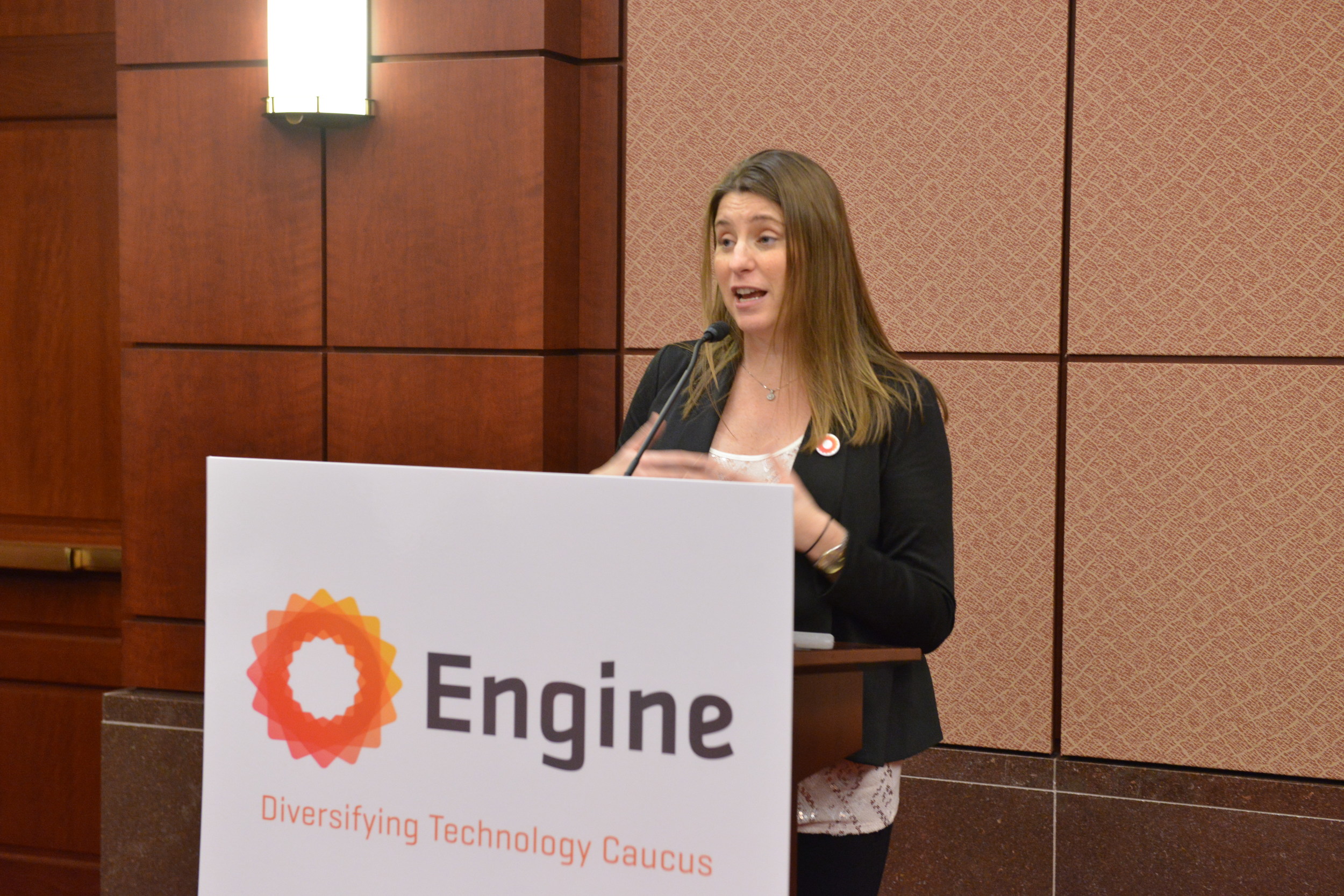
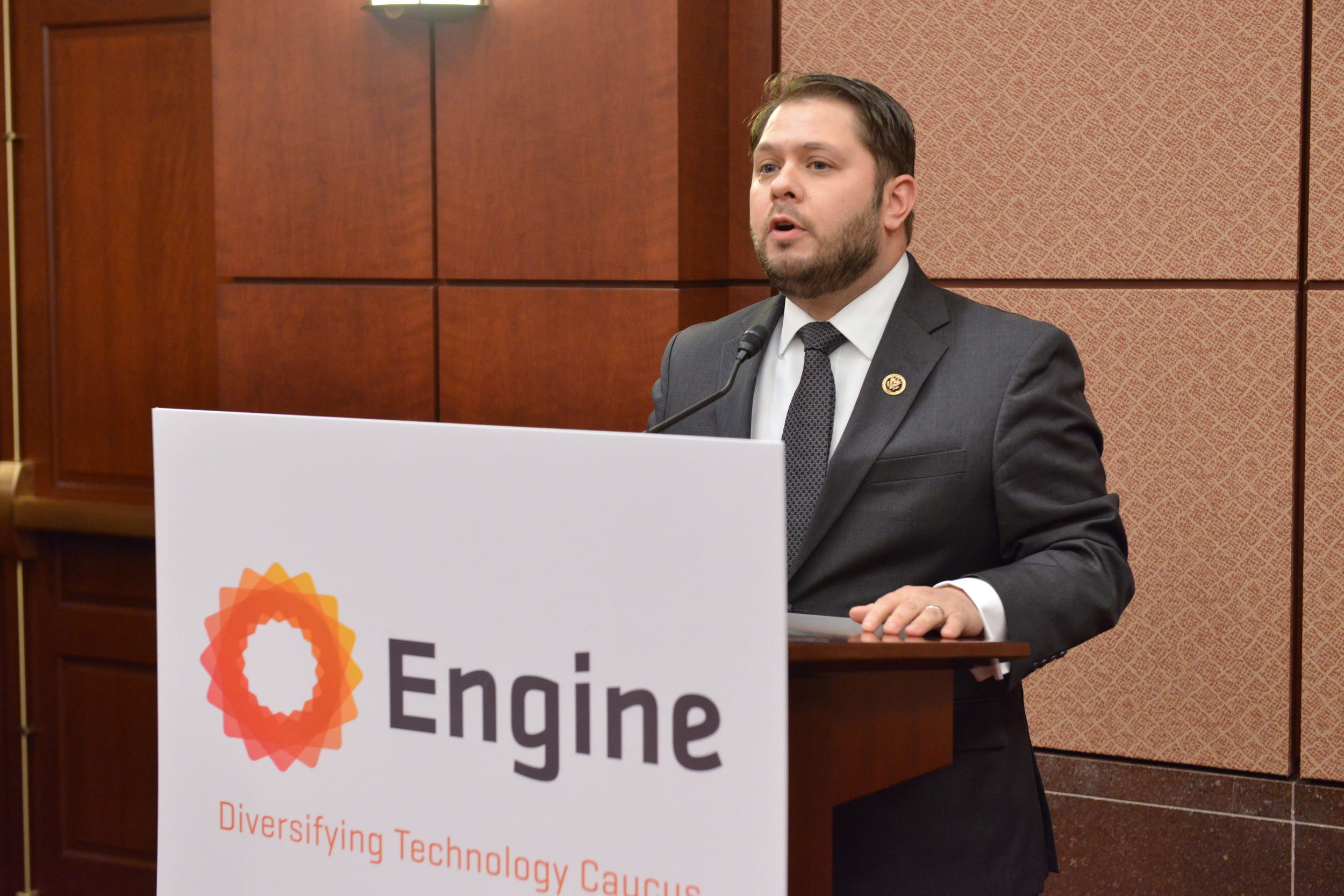
Yesterday, we were on Capitol Hill to launch our new Diversifying Tech Caucus. We’re excited to work with our Congressional Co-chairs—Senators Amy Klobuchar (D-MN), Shelley Moore Capito (R-WV) and Tim Scott (R-SC), and Representatives Cathy McMorris Rodgers (R-WA), Barbara Comstock (R-VA), Tulsi Gabbard (D-HI), Robin Kelly (D-IL) and Ruben Gallego (D-AZ)— to increase representation of women, minorities, and veterans in the tech sector, and the ability of these groups to access the good jobs that this industry creates.

Lack of diversity in tech is a well-documented and serious problem. Right now only one in 14 technical employees in Silicon Valley is African-American or Hispanic. Women currently represent fewer than 13 percent of employed engineers and hold fewer than 25 percent of STEM jobs. And just three percent of all startups are founded by women.

Congress can play a unique role in calling attention to these challenges, highlighting existing best practices, driving a public conversation, and designing policy initiatives that support and promote diversity. The Diversifying Tech Caucus will be a true partnership between policy makers, industry, and academia to organize, advocate, and create awareness about underrepresented groups and develop strategies for improving access and engagement. Industry and academic leaders will also work together to undertake extensive new research that legislators can use to elevate the issue and help develop meaningful solutions.

Lack of diversity in the tech industry is a complicated problem, one without a single, easy fix. But we are confident that when you get smart people from different walks of life with different sets of tools around a table, you can take great strides toward making it better. We have lots of work to do and can’t wait to get started.

 Julie

 Engine Executive Director Julie Samuels

Capito

Senator Shelley Moore Capito (R-WV)

Klobuchar 

Senator Amy Klobuchar (D-MN)

CMR

Congresswomen Cathy McMorris Rodgers (R-WA)

Ruben

Congressman Ruben Gallego (D-AZ)

Tulsi

Congresswoman Tulsi Gabbard (D-HI)

Blake

Congressman Blake Farenthold (R-TX)


The JOBS Act Isn’t Just About Crowdfunding

Finance.jpg

Entrepreneurs and investors may have to wait until 2016 for the true equity crowdfunding that the JOBS Act was meant to establish. But the SEC will likely soon finalize rules that open another funding avenue for small businesses. Regulation A+, an amended version of a securities registration exemption referred to as Regulation A, could serve as a viable capital source for small, emerging growth companies. Though it hasn’t been as well-publicized as other provisions of the JOBS Act, startups would be wise to pay attention.

The Securities Act, which lays out the laws governing how companies and investors can buy and sell shares, authorizes the Securities and Exchange Commission to decide which types of securities are subject to onerous registration requirements. Recognizing that smaller, private companies may not have the resources to comply with full SEC registration rules, the SEC created an exemption to its registration rules, called Regulation A, that  allows non-publicly traded companies to file a sort of mini-registration with the SEC and avoid the kind of full-blown disclosure and review that publicly-traded companies undergo. Using Regulation A has other advantages, too: for instance, unaccredited investors can participate in Regulation A offerings alongside accredited investors. (You can read our post on the accredited investor definition here.)

Despite its benefits, the previous version of Regulation A has not been widely used. Before the JOBS Act, companies could raise a maximum of $5 million, but relying on this exemption required issuers to navigate the dozens of varying blue sky laws, state laws that regulate the buying and selling of securities. Though such laws play a needed role in protecting consumers from fraud, the resulting complexity and costs of complying with the different filing and review regulations in every state simply wasn’t worth it for most companies. With the JOBS Act, Congress gave Regulation A (now Regulation A+) new life by raising the offering cap to $50 million. What’s still a sticking point, however, is whether the SEC’s final rules will include provisions that preempt state blue sky laws. That could determine whether this underused investment tool becomes a true financial opportunity for small businesses.

As for equity crowdfunding (outlined in Title III of the JOBS Act), while it remains a promising avenue for startup funding, especially in filling the need for pre-seed and seed capital, the SEC may be nowhere near issuing final rules (despite our emphatic pleas). Industry experts also worry that some of the disclosure, compliance, and financial auditing costs required under proposed SEC crowdfunding rules may ultimately deter companies from using Title III, as other, less costly funding options are available. For now though, without final rules from the SEC, both Regulation A+ and Title III crowdfunding remain unavailable to capital-seeking startups. We and thousands of entrepreneurs around the country still eagerly await the agency's long-anticipated action.

It’s not too late to add your name to our letter urging the SEC to finalize the JOBS Act. While the letter has been sent to the SEC, add your name to show support and receive occasional JOBS Act updates from Engine.


Tech in New York - Governor Cuomo’s 2015 Opportunity Agenda

Policy_Updates1.jpg

With Engine having recently expanded to New York, we’re paying closer attention than ever to the decisions being made in Albany and their impact on the state’s tech sector. New York is home to one of the largest and most rapidly expanding startup communities in the country, so local and state level policies on investment and regulation have implications for the future of tech in all fifty states. This afternoon, Governor Cuomo laid out his vision for 2015 in a combined State of the State and budget address, along with a 500-page policy book that included additional proposals and details. While the presentation covered a wide range of topics from criminal justice to transportation infrastructure, the Governor did include several initiatives of particular interest to the startup community in both the education and economic development sections of his speech. For example, the Governor discussed his recently announced New NY Broadband Program, which would provide matching funds for internet service providers that invest in high-speed broadband in underserved areas. Access to broadband is essential not just for consumers, but for growing and potential startup communities as well. By using state funds to leverage private investments, this program could go a long way towards supporting innovation around the state. At the same time, the Governor avoided mention of the proposed merger of Comcast and Time Warner Cable, which would do much to undermine efforts to improve broadband access here in New York and around the country. Giving Comcast that kind of monopolistic control over broadband would remove almost any incentive for them to provide the higher internet speeds necessary for startups to thrive, and for us to remain competitive with other countries. Governor Cuomo has previously indicated his concerns about the proposed merger, and the state’s Public Service Commission is currently reviewing the deal to determine if it would benefit or harm New Yorkers. We urge the Governor and the PSC to oppose this deal, and continue to champion high-speed access for all New Yorkers. The Governor also talked about expanding a number of programs that would provide startups with access to capital, technical support, and other incentives. One proposal particularly worth noting is doubling the NY State Innovation Venture Capital Fund from $50 million to $100 million. The Fund is overseen by Empire State Development, and provides two types of investments: small pre-seed stage investments of up to $100,000 to startups associated with universities in state; and investments of up to $5 million in businesses in strategic tech industries. This additional capital, and the private investment it can leverage, could make a big difference for some startups that would otherwise have trouble accessing funding. And the state can do even more to help New York startups access capital. In his campaign policy book released in October, Governor Cuomo declared his support for equity crowdfunding, which provides financing opportunity for businesses that have a hard time attracting traditional venture capital. Crowdfunding has proven to be especially beneficial to women and minority owned startups. And while the real solution is federal authorization of equity crowdfunding, New York could join more than a dozen other states that have already authorizing intrastate crowdfunding. This would not only provide greater opportunities for diverse startups in Queens or Albany or Rochester, it would help build momentum towards federal action. We hope to see more support from the Governor on this subject in the months ahead. The Governor also discussed a package of proposals to improve higher education in ways that would better prepare students for tech jobs and help startups access the talent they need in order to grow. He talked about creating partnerships between community colleges and employers, and rewarding schools who use those partnerships to provide students with real-world job skills. He proposed an Employee Training Incentive Program that would provide tax incentives for companies that provide on-the-job training. And perhaps most exciting, Governor Cuomo proposed changes that would streamline approval of new programs and degrees both at higher education institutions and high-quality proprietary schools. Recognizing that the skills many new employers need change on a yearly or even monthly basis, he said that “it can no longer take two years for a new degree or training program to be approved.” With startups in constant need of new talent, we welcome the Governor’s commitment to providing students in New York relevant skills. And since startups account for all net new job growth in the United States, making sure those jobs go to New Yorkers is good local economic policy. As more decisions around the details and implementation of these proposals get made, we’ll be working to ensure that startups play a meaningful part in the conversation. And we’ll continue looking for other ways policy makers here in New York can support innovation throughout the state.

What Startups Heard in the State of the Union

house_cropped.jpg

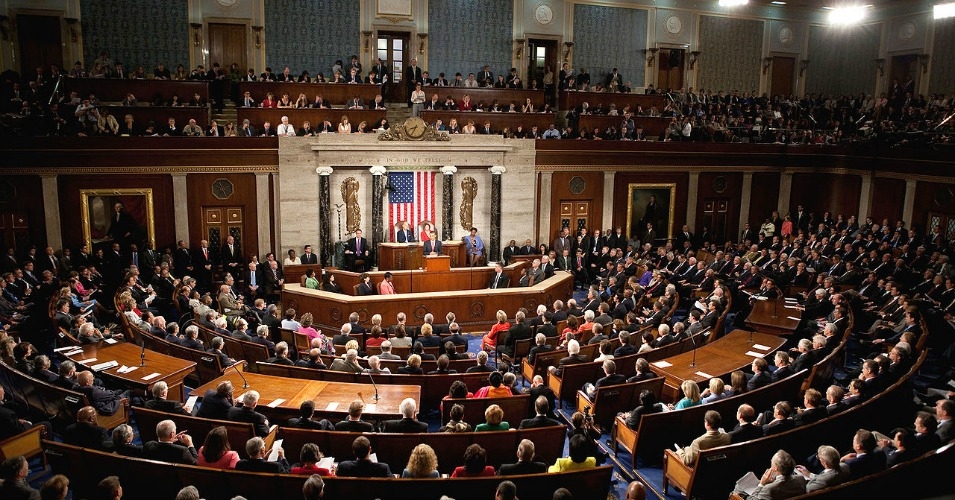
Tonight’s State of the Union proved to be something of a mixed bag for the startup community. Which was a bit surprising, because over the past few weeks President Obama has previewed a number of new tech-related proposals. This was a natural move for a President seeking to highlight the nation’s economic recovery, as the tech industry—and particularly startups—are driving our economic recovery and are responsible for all net new job growth in the United States.

The President’s speech did touch on some of those proposals, such as improving access to broadband and a highly educated workforce. But other important issues, like net neutrality, received only passing mention. And some topics, like patent reform, were missing from the speech altogether.

Here’s a look at what startups heard—or didn’t hear—in this year’s State of the Union.

Community Broadband

"21st century businesses need 21st century infrastructure — modern ports, stronger bridges, faster trains and the fastest internet.

I intend to protect a free and open internet, extend its reach to every classroom, and every community, and help folks build the fastest networks, so that the next generation of digital innovators and entrepreneurs have the platform to keep reshaping our world."

Last week the President spoke in more detail about his plans to expand high-speed internet access in communities across the country. These plans include calling on the FCC to overturn limitations on community broadband, technical support to municipalities that are interested in creating their own broadband networks, and a package of grants and loans to incentivize rural broadband providers.

This is especially exciting news for burgeoning startup communities in areas where ISPs have so far failed to invest. We’ve already seen the impact that community broadband has made in places like Chattanooga, TN, Wilson, NC, and Danville, VA. Ultra high-speed broadband networks help attract startup activity to take advantage of the fast connections, which in turn drives consumer demand and ultimately, more investment in broadband infrastructure. The better the Internet infrastructure a community has, the more attractive that community is to new startups and the good jobs they create.

Access to Talent

"That’s why I am sending this Congress a bold new plan to lower the cost of community college — to zero.

We’re connecting community colleges with local employers to train workers to fill high-paying jobs like coding, and nursing, and robotics..."

One of the greatest challenges for the startup community is accessing a steady stream of talented people with ideas for new businesses and the skills needed to grow those businesses. Improving STEM education is critical if we’re going have future generations of homegrown talent.

Last week President Obama announced a package of higher education proposals that included making community college free for students across the country, and expanding technical training programs that provide skills tailored to in demand jobs. While many of the details of these proposals are still forthcoming, we’re optimistic that they will expand both access to and quality of STEM education, and we urge the White House to include the startup community in designing the details of implementation.

"Yes, passions still fly on immigration, but surely we can all see something of ourselves in the striving young student, and agree that no one benefits when a hardworking mom is taken from her child, and that it’s possible to shape a law that upholds our tradition as a nation of laws and a nation of immigrants."

The other piece of the puzzle when it comes to accessing talent is reforming our immigration system, so that foreign born entrepreneurs can come here, start a business here, and create jobs here. We’ve heard less about immigration reform from the President in the days leading up to the State of the Union, but the Executive Order he issued in November took a number of key first steps towards reform.

Among other provisions, the Executive Order expands immigration options for foreign-born entrepreneurs and makes it easier for high-skilled workers awaiting Lawful Permanent Resident status to change jobs. While these changes are important, the executive action did not raise the visa supply, something that’s been a priority for the tech community for years and requires legislative action. We also need to establish a true founder’s visa, so that entrepreneurs can come to the United States to start new ventures, rather than being tied to a job with an existing employer.

Data and Security

"Tonight, I urge this Congress to finally pass the legislation we need to better meet the evolving threat of cyber-attacks, combat identity theft, and protect our children’s information. If we don’t act, we’ll leave our nation and our economy vulnerable. If we do, we can continue to protect the technologies that have unleashed untold opportunities for people around the globe.

While some have moved on from the debates over our surveillance programs, I haven’t. As promised, our intelligence agencies have worked hard, with the recommendations of privacy advocates, to increase transparency and build more safeguards against potential abuse. And next month, we’ll issue a report on how we’re keeping our promise to keep our country safe while strengthening privacy."


The President has announced a package of proposals around data and security, including legislation that would enhance information sharing between the private sector and government agencies, expanded powers for law enforcement to combat data theft, and expanded reporting requirements around data breaches.

As more and more business migrates to the Internet, it is vitally important that consumers have confidence that the information they are sharing with online businesses is secure and private while the regulatory climate also remains ripe for innovation. Revelations about the NSA’s surveillance activity may cost the cloud computing industry billions of dollars as consumers refrain from using services they perceive to be unsecure. There is, of course, a balance that must be achieved between rules that adequately safeguard consumer information and those that impose unduly burdensome obligations on startups without providing any meaningful security or privacy benefit for users.

The startup community looks forward to being part of this ongoing conversation, and working towards smart, manageable regulation that allows for both strong consumer protections and continued business expansion and job growth.

Other Proposals

"My plan will make quality childcare more available, and more affordable, for every middle-class and low-income family with young children in America — by creating more slots and a new tax cut of up to $3,000 per child, per year.

So I’ll be taking new action to help states adopt paid leave laws of their own. And since paid sick leave won where it was on the ballot last November, let’s put it to a vote right here in Washington. Send me a bill that gives every worker in America the opportunity to earn seven days of paid sick leave. It’s the right thing to do."

While access to affordable childcare and parental leave may not sound like tech policies, they are in fact critical to creating an environment where Americans of any age and background have the ability to take a chance on a new idea or a new startup. They’ll also help make sure that a diverse cross section of Americans has the opportunity to go to work, which will in turn help spur much needed diversity within job sectors like tech.

What Was Left Unsaid

Net Neutrality

President Obama has been a vocal supporter of reclassifying broadband Internet under Title II of the Communications Act. However, tonight’s speech featured just a passing hat tip to protecting an open Internet.

Strong net neutrality rules are essential for the future of entrepreneurship in this country. If ISPs are allowed to extract fees from companies that can afford to pay for faster delivery of their content, it would create a nearly insurmountable disadvantage for the new startups that are driving new job growth.

Tonight’s speech comes less than 24 hours before major Congressional hearings on net neutrality, and just a few short weeks before the FCC is set to introduce new rules on the subject. Opponents of an open Internet are mobilizing for a last ditch effort to undermine meaningful net neutrality. That’s why in the days ahead you’ll see the startup community continue to rally against proposed legislation that would provide net neutrality in name only, and work to ensure the FCC takes action that will preserve an open Internet for generations to come. We hope we’ll continue to see more leadership from the President on this issue.

Patent Reform

Patent trolls remain one of the biggest threats to startups, forcing many growing companies to choose between hefty legal fees or baseless settlements. It’s a problem President Obama acknowledged in last year’s State of the Union when he said, “Let’s pass a patent reform bill that allows our businesses to stay focused on innovation, not costly, needless litigation.” That reform legislation came very close to passing last session before ultimately dying in the Senate.

With a change in Senate leadership, many of us in the startup community are optimistic about significant movement on patent reform. So we were disappointed to see the President avoid the topic entirely in this year’s speech. While we’re confident that he remains committed to reform, we hope to see him more aggressively pushing for legislation in the weeks to come.

Looking Ahead

"Some of our bedrock sectors, like our auto industry, are booming. But there are also millions of Americans who work in jobs that didn’t even exist ten or twenty years ago — jobs at companies like Google, and eBay, and Tesla."

Overall, the President clearly acknowledged the growing importance of the tech industry to both our economic recovery and to the daily lives of every American. But while he shouted out some of the biggest success stories in the tech community, he failed to mention that not that many years ago, these companies were all startups. And the startups of today will be the success stories and the job creators of tomorrow.

Overall, compared to some previous years, tonight’s State of the Union was a bit light on tech policy. But considering the President’s recent leadership—along with the leadership from members of both parties on the Hill—on a number of issues critical to the future of the tech industry, it’s easy to remain optimistic about our potential for real victories this year.

With FCC action on the horizon, the startup community will be focused intensely on net neutrality in the weeks ahead. At the same time, we’ll be working to make sure that startup voices are heard on topics ranging from immigration to patent reform. And we’ll maintain pressure on the President and on lawmakers in both parties to support innovation and opportunity for everyone.

Net Neutrality Shake Up: Sprint Endorses Title II, GOP Introduces Legislation

Open_Internet-540x3102.jpg

Today marked something of a sea change in the net neutrality debate that has gripped the country for the past year. The reclassification of broadband as a common carrier service under Title II seemed all but dead on arrival just a few short months ago. This cast real doubt on the future of startups in this country, and the jobs and economic opportunities that they create.

Now, groups that once bristled at the mere mention of strong net neutrality rules are publicly embracing the tenets of an open Internet. Perhaps most exciting is Sprint declaring their support for Title II reclassification, making them the first national mobile carrier to do so. Sprint’s announcement is further evidence that reclassification would do nothing to chill investment in the expansion of broadband infrastructure.

The other big news of the day was the release of a net neutrality bill from House Republicans. This bill includes some encouraging provisions, including rules that prevent ISPs from blocking, throttling, or charging edge providers for preferential access to customers—the cornerstones of any strong net neutrality rules—and applies these rules to both wireless and wireline broadband. Of course the devil is in the details, and upon closer examination it is clear that the proposed legislation would do much to undermine the future of an open Internet.

For one thing, the bill appears to apply to only customer-facing prioritization, meaning that the rules will not prevent ISPs from using their gatekeeper power to extort money from edge providers at the peering/interconnection level. Since some of the most notable net neutrality violations in recent history involved interconnection, this loophole may be large enough to swallow the rules altogether. And, since the proposed legislation would prohibit the FCC from addressing any future avenues for discrimination, ISPs would simply have to be more creative in how they extract rents from edge providers.

The bill would also rescind an important tool that allows the FCC and state agencies to ensure broadband competition and deployment—Section 706. While 706 by itself is an insufficient grant of authority to effectively ensure an open Internet, it still has an important role in policing ISP malfeasance. As President Obama discussed earlier this week, the FCC can and should use its 706 authority to overturn laws (passed at the behest of large ISPs) that prevent municipalities from providing broadband for their citizens. Under the proposed House bill, the FCC will lose its ability to vacate these anti-competitive handouts to ISPs. Similarly, invalidating 706 as a grant of authority could diminish the role of the FCC and similar state agencies in reviewing harmful broadband consolidation, like the proposed merger between Comcast and Time Warner.

While it’s encouraging to see those once opposed to net neutrality start talking about rules that would protect an open Internet, it would be naive to think that the proposed legislation is anything other than an attempt by ISPs and their supporters to squeeze whatever benefit they can from what they see as a bad development: the FCC’s impending decision to reclassify broadband under Title II. The proposed legislation fails to offer the same strong net neutrality rules that the FCC can provide under Title II, and instead would make it impossible for the FCC to act in the future to protect a vibrant Internet.

The legislation as drafted seems to be little more than a last ditch effort by the opponents of net neutrality to prevent a reclassification that seems increasingly inevitable. Those of us in the startup community who have been fighting for an open Internet must continue to make a clear case to legislators, the FCC, and members of the public: Title II reclassification is the best way to guarantee net neutrality, not just in the short term, but for generations to come.


Bipartisan Senate Bills Propose Critical Reforms for the Tech Community

Talent.jpg

We’ve said it before and we’ll say it again: many of the greatest obstacles to attracting and retaining tech talent are the result of our country’s broken immigration system. There’s a pressing need for substantial legislative reforms that reach beyond the President’s recent executive actions. So we’re happy to see the new Congress hit the ground running with two high-skilled immigration bills—the Startup and the Immigration Innovation (“I-Squared”) Act, both bipartisan efforts introduced in the Senate this week. These important pieces of legislation propose a number of critical reforms to our immigration system, including increasing the pool of visas available to the high-skilled talent our technology and startup communities desperately need.

The bills vary in their approach, but cover similar ground. On Tuesday, Senators Orrin Hatch (R-Utah), Amy Klobuchar (D-Minn.), Marco Rubio (R-Fla.), Chris Coons (D-Del.), Jeff Flake (R-Ariz.), and Richard Blumenthal (D-Conn.) re-introduced the Immigration Innovation Act, (also known as the “I-Squared” Act). The bill would increase the H-1B cap from 65,000 to 115,000 visas, expand worker mobility for visa-holders in-between jobs, and create a number of important exemptions from the Green Card cap for professionals in STEM fields.

The Startup Act, originally introduced in February 2013 (you can read what we wrote then here), was re-introduced today by Senators Mark Warner (D-Va.) and Tim Kaine (D-VA) along with Sens. Jerry Moran (R-KS) Chris Coons (D-DE), Roy Blunt (R-MO) and Amy Klobuchar (D-MN). Their bill tackles many of the same issues with visa limitations, and goes farther in establishing an Entrepreneur’s Visa to allow founders of new businesses to remain in the United States, launch businesses, and create jobs.

Providing a pathway for entrepreneurs to create businesses in the U.S. is particularly important. Under current employment-based visa provisions, it is exceedingly difficult for entrepreneurs to venture out on their own and create startups which will in turn create new jobs here in the U.S. Immigrants are twice as likely to start businesses as their native-born peers, and failing to provide an easy way for foreign entrepreneurs to start their businesses here is essentially the same thing as shipping jobs overseas.

While both bills are likely to face some real challenges in Congress, the need to make our immigration system more innovation-friendly has become increasingly clear. We urge leaders on both sides of the aisle to support the kinds of common sense reforms found in these bills. The future of our economy depends on it.