
#StartupsEverywhere: Seattle, Wash.
#StartupsEverywhere: Kunal Chopra, CEO & Founder, Certivo
This profile is part of #StartupsEverywhere, an ongoing series highlighting startup leaders in ecosystems across the country. This interview has been edited for length, content, and clarity.
Automating supply chains
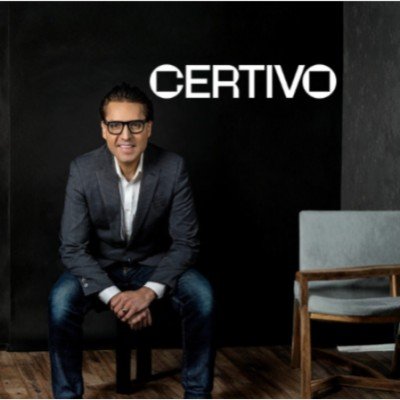
Kunal Chopra is no stranger to the world of innovation. He founded Certivo, a supply chain compliance assistant, after more than two decades in the tech sector and serving as CEO for three separate companies. We sat down with Kunal to discuss his company, the role of public-private partnerships in innovation, and how startups engage with vague laws around the world involving their operations.
Tell us about your background. What led you to Certivo?
I’ve spent a lot of the past 10 years working in supply chains at Amazon. I got an in-depth look at the inefficiencies that plague modern-day supply chains. One inefficiency that stood out to me was around compliance. In order to access particular markets, jurisdictions, and customers, the distributor has to ensure compliance with local laws. You’d think this would be the most high-tech, documented part of the supply chain, but in reality, it’s all Excel-based. Chasing suppliers, collecting documentation, validating it, keeping track of rules and regulations, all kept in an Excel spreadsheet. This gave me the opportunity to rethink this entire process using AI.
What is the work you all are doing at Certivo? Who are your users/customers?
Certivo is an AI native compliance management platform for the supply chain. We work mostly in manufacturing and construction. We’re able to automate a significant portion of management, especially the grunt work: keeping track of rules, regulations, updates, documentation, and outstanding tasks. Smaller vendors and distributors don’t have the time or money to keep up with international shipping laws in every country and territory. Certivo is the AI assistant that helps human workers focus on high-value tasks.
How has building a startup in Seattle benefitted your business?
There’s a lot of innovation happening in the greater Seattle area. Most governments are happy to see their constituents innovate, but they aren’t usually partnering with early-stage startups. Especially in the software space, most governments go with tried and tested old school products. This is where the city of Bellevue differs; they’ve launched a program—the Public-Private Design Partnership—that allows the government to test startups’ software for three months and then decide whether or not to purchase the full system. This gives small startups like mine the chance to have local governments as clients and bypass the traditional procurement process. The Public-Private Design Partnership has been very successful. Because Bellevue was a partner in Certivo’s development, we were able to build a government-specific version of our product that is tried and tested and ready to be used for other local governments. It’s a win-win; they get the software they need, and we get a more robust final product.
How do you think unclear or conflicting rules impact startups?
There’s a big market for expensive consultants when a company doesn’t know what to do in the face of unclear laws and regulations. Companies, rightly, don’t want to take the risk of unknowingly violating a vaguely worded policy. So either the company pays a lot of money to pass the risk to someone else, or they avoid doing business where that policy is the law of the land. Startups like Certivo can’t operate in areas like that because there’s no guarantee that how we comply is the right way to comply. We’re looking at the EU Cyber Security Resilience Act (EUCRA) and, in its current form, it’s so vague that even a human can’t properly interpret it. There is an opportunity to really simplify the language around policies like this and make it straightforward and more black and white. AI compliance tools can help cut down where there are grey areas, but it’s up to humans to write clearer laws in the first place.
Are there any local, state, or federal startup issues that you think should receive more attention from policymakers?
I think we’re at the technological point now where governments need to reconsider how they operate and do procurement. We don’t work directly with governments as customers, and I’ve had investors warn me not to try because it can take years before a company gets a procurement contract. There’s so much innovation happening that governments could benefit from if we could just make it simple for them to work with startups like ours. We could show that we can create and prove and deliver a solution that could work for them. Instead, governments are confronting the modern age with slow and outdated procedures.
What are your goals for Certivo moving forward?
I hope that in five years, Certivo is doing $1 billion in annual recurring revenue. We’ve created some amazing jobs here in the greater Seattle area, and we’re expanding globally. We have great financial partners, and I think we’re on the right track. From a product perspective, our vision is to automate supply chain compliance. Navigating complex supply chain compliance requirements is an unnecessary waste on companies with an industry of consultants and departments just to interpret what should be clear and simple rules and regulations. If we can automate it, I think it’s a win for everyone.
All of the information in this profile was accurate at the date and time of publication.
Engine works to ensure that policymakers look for insight from the startup ecosystem when they are considering programs and legislation that affect entrepreneurs. Together, our voice is louder and more effective. Many of our lawmakers do not have first-hand experience with the country's thriving startup ecosystem, so it’s our job to amplify that perspective. To nominate a person, company, or organization to be featured in our #StartupsEverywhere series, email advocacy@engine.is.
