
#StartupsEverywhere: Runbin Dong, Founder & CEO, Scale Social
This profile is part of #StartupsEverywhere, an ongoing series highlighting startup leaders in ecosystems across the country. This interview has been edited for length, content, and clarity.
AI Infrastructure Enabling Authentic User-Generated Content (UGC)
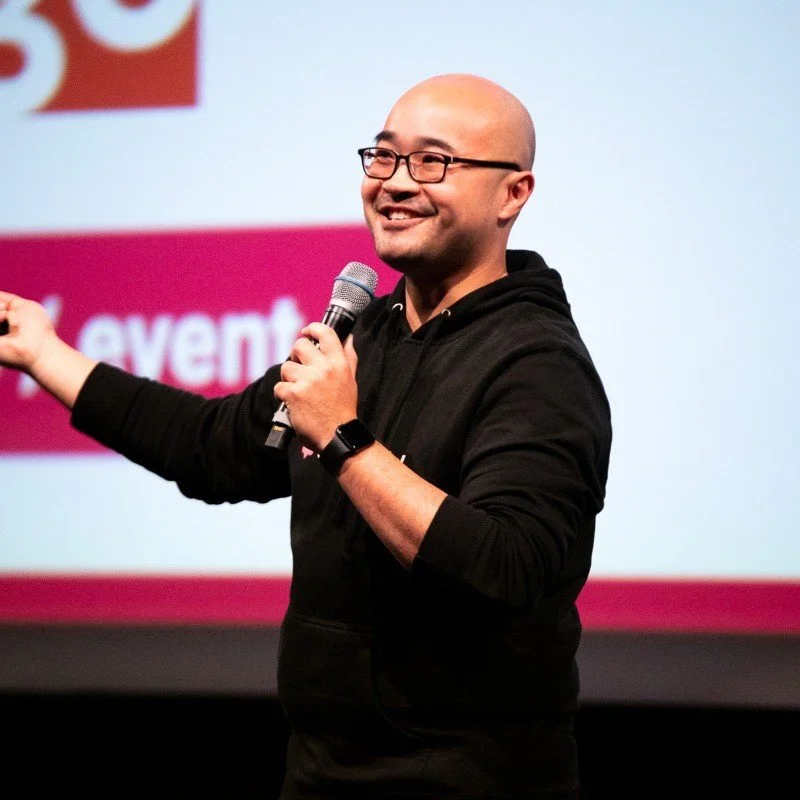
Scale Social, a Raleigh, North Carolina-based startup, helps brands capture authentic user-generated content (UGC) by integrating technology into mobile apps or activating via on-site quick response (QR) codes, building a centralized library of real customer moments with full marketing rights. We sat down with Founder and CEO Runbin Dong to discuss his journey from IBM Watson and a family dumpling business to founding an AI-native startup, the challenges posed by the H-1B visa system, and how the R&D tax credit and Qualified Small Business Stock (QSBS) exemption can shape a tech startup's journey.
Tell us about your background. What led you to Scale Social?
My background is in AI and technology, having worked in product management at IBM Watson. After spending time in both the corporate and startup worlds, I found the spark for Scale Social while running a handmade dumpling business with my mom and recognizing the opportunity to scale authentic content.
While running that small business, I realized how hard it was to market a brand authentically at scale. When we tried off-the-shelf generative AI tools to create marketing copy, it sounded inauthentic and missed the 'soul' of the business. That challenge inspired Scale Social: we built the infrastructure to capture real moments from real people and turn them into marketing assets.
What is the work you are doing at Scale Social?
We are an infrastructure layer. Instead of processing payments like Stripe, we process authentic content. Our tech embeds natively in mobile apps, in embedded digital interfaces, or activates via QR codes at physical sites, letting customers upload their experiences in real time, often in exchange for value like a fast pass. Brands get a centralized UGC library with full marketing rights.
Our customers include global biopharma, pet health, e-commerce, and hospitality brands. We enable them to prompt users for creative content and use AI to evaluate and categorize assets in real time, ensuring data is anonymized and free of personally identifiable information.
How does the current immigration system impact your ability to scale?
Talent access is a major issue, and the H-1B visa process is a significant barrier. We often meet outstanding international talent, but for startups, hiring is costly. Legal and filing fees to sponsor someone can exceed $100,000.
Even then, there's no guarantee. After paying the fees, you still end up in a lottery system. This forces a difficult calculus where startups must take a massive financial risk or pass on top-tier talent in favor of someone who already has a work permit. As AI talent continues to shift globally, it is becoming harder for U.S. startups to secure the best minds, putting domestic innovation at a disadvantage.
How do tax policies like QSBS and R&D credits support your growth?
Operationally, tax incentives play a vital role. The QSBS framework is positive for entrepreneurs since it encourages the cycle of starting, exiting, and reinvesting in the next venture.
The R&D tax credit is also beneficial, since it helps offset the ongoing investment required to build a tech-native AI company. By reducing our tax bill, we can redirect those resources immediately back into hiring and product growth. These policies provide a practical cushion that allows us to focus more on problem-solving for our customers and less on pure financial survival.
Are there any local, state, or federal startup issues that you think should receive more attention from policymakers?
Having gone from running a traditional small business to founding an AI-native startup, I've come to see that these are two different worlds. Support structures such as NC IDEA, North Carolina's Council for Entrepreneurial Development and American Underground, a local startup incubator and co-working space, are vital in bridging the gap between local commerce and high-growth venture communities.
What are your goals for Scale Social moving forward?
In the next three to five years, we want Scale Social to be the leading infrastructure for capturing authentic content. While our operations remain in the U.S. for now, we see global potential. As AI content increases, we believe consumers will pay more for original content. We aim to keep real human experiences at the heart of the brand-consumer relationship.
Right now, plenty of challenges make it difficult to operate as a startup or small business. But I think the entrepreneurial spirit is the biggest factor in social mobility, and I hope it continues to grow. I believe the American spirit will persevere.
All of the information in this profile was accurate at the date and time of publication.
Engine works to ensure that policymakers look for insight from the startup ecosystem when they are considering programs and legislation that affect entrepreneurs. Together, our voice is louder and more effective. Many of our lawmakers do not have first-hand experience with the country's thriving startup ecosystem, so it’s our job to amplify that perspective. To nominate a person, company, or organization to be featured in our #StartupsEverywhere series, email advocacy@engine.is.
