
#StartupsEverywhere: New York, N.Y.
#StartupsEverywhere: Michael Rhys, CEO & Cofounder, Barnwell Bio
This profile is part of #StartupsEverywhere, an ongoing series highlighting startup leaders in ecosystems across the country. This interview has been edited for length, content, and clarity.
Monitoring the Barn Microbiome
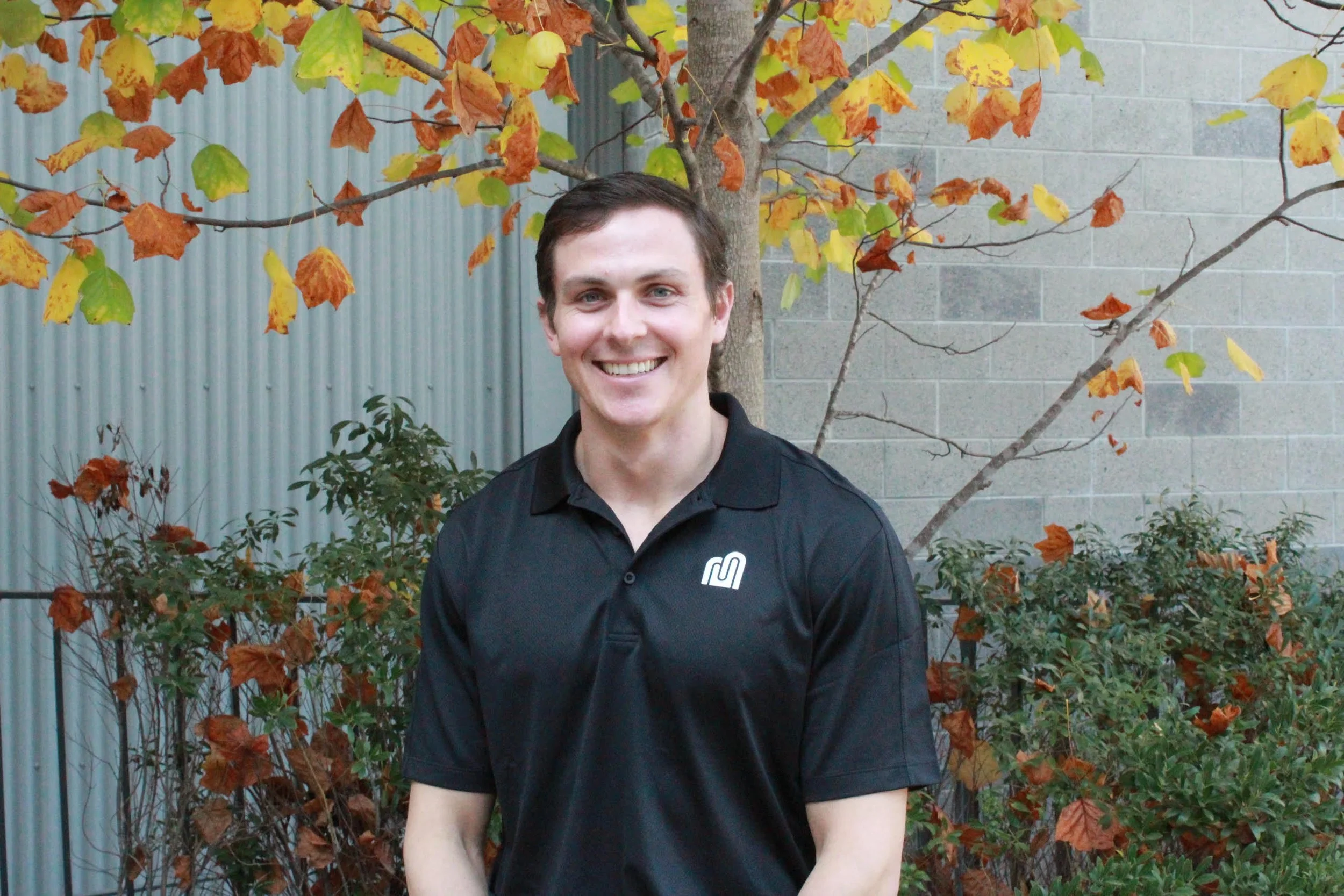
New York-based startup Barnwell Bio is modernizing disease analysis in the poultry industry without compromising the efficiency and biosecurity that farmers depend on. Their metagenomic sequencing platform—analyzing all DNA present in a sample—converts traditional reactive disease testing into a proactive health management system. We sat down with CEO and co-founder, Michael Rhys, to discuss his transition from COVID-19 wastewater tracking to animal agriculture, the role of AI in characterizing the microbiome, and his experience navigating federal grants and research funding.
Tell us about your background. What led you to Barnwell Bio?
I began my career in finance but soon realized I wanted to do something more hands-on, so I went back to graduate school at the University of Cambridge. While completing that degree, COVID-19 hit. That was when I learned about wastewater surveillance of the virus, where cities and municipalities were leveraging municipal wastewater to better understand how the virus was spreading and changing. There was a start-up leading the charge here, and I joined the company as one of their early business hires. They expanded wastewater testing to hundreds of communities, helping the Centers for Disease Control and Prevention and public health departments track the spread of the virus.
From that experience, I saw how powerful and cost-effective this non-invasive sampling and data could be. About two and a half years ago, my co-founders and I—who also worked at the prior startup—began thinking about applying this approach to animal agriculture. We launched Barnwell Bio in April 2024; the same week news broke that dairy cows were confirmed with H5N1, or bird flu. We saw that the current state of animal disease surveillance is very reactive, with folks addressing issues only after symptoms appear, and we wanted to provide a tool to help them understand complex disease threats much sooner.
What is the work you all are doing at Barnwell Bio?
Barnwell Bio uses shotgun metagenomic sequencing of DNA to analyze the barn microbiome by looking at all microorganisms living in the barn, including bacteria, viruses, and fungi. We benchmark pathogen loads against our database, allowing us to identify harmful pathogen trends and monitor the impact of interventions, giving producers a holistic sense of animal health risk in their barns. Our goal is to help producers save time and money while protecting their flocks.
Our primary customers are poultry producers, including those in the egg layer, broiler, and turkey industries. We work with customers like Vital Farms and West Liberty Foods to provide these insights directly to their farms and veterinary staff.
How are you utilizing AI to assist producers?
We have already generated one of the largest and most unique poultry metagenomic data sets in the world, and each sample we analyze contributes to this asset. We use AI across the company to support product development, analyze data, and make ourselves more efficient. Our goal is to use the tool to provide faster, more holistic insights to our producer partners on what might be going on in their operations, and what might be going on in the area around them to avoid something coming onto the farm in the first place.
What has your experience been with the grant systems and funding?
The Small Business Innovation Research program is fundamental; at my previous company, we used Phase III funding to expand beyond our core product, including opioid wastewater analysis systems. At Barnwell, we’ve won non-federal grants from the Amazon Web Services Compute for Climate Fellowship to support some of our bioinformatics development. These programs are amazing for exploring the next frontier of research that might be hard to justify with venture dollars alone. Additionally, we received a grant through the Foundation for Food & Agriculture Research program (a public-private partnership that offers grants) to fund research into the bird flu response and on building out our RNA platform.
One drawback is disruptive "starts and stops" in federal programs, which create bottlenecks. When programs pause or face funding uncertainty, startups may wait months for evaluation or lose funding mid-process, both are major burdens. We need more consistent, innovation-focused grants and faster cycles that match the realities of building a company.
What are your goals for Barnwell Bio moving forward?
In the next few years, we plan to expand beyond poultry to other farm species. Microbiome insights can help producers across agriculture make more informed decisions. We recently signed our first international customer in Canada and aim to expand further, since diseases don't recognize borders.
We also plan to further build out our data asset to provide a holistic view of animal health. This includes providing our producer partners with regional insights on any pathogen threats that may be circulating, but are not yet in their barn. By equipping producers and veterinarians with as much information as possible, we can begin to move the industry away from reactive crisis management towards a proactive, resilient global food system.
All of the information in this profile was accurate at the date and time of publication.
Engine works to ensure that policymakers look for insight from the startup ecosystem when they are considering programs and legislation that affect entrepreneurs. Together, our voice is louder and more effective. Many of our lawmakers do not have first-hand experience with the country's thriving startup ecosystem, so it’s our job to amplify that perspective. To nominate a person, company, or organization to be featured in our #StartupsEverywhere series, email advocacy@engine.is.
