
#StartupsEverywhere: Troy M, Morris, Co-Founder & CEO, Kall Morris Inc (KMI)
This profile is part of #StartupsEverywhere, an ongoing series highlighting startup leaders in ecosystems across the country. This interview has been edited for length, content, and clarity.
Securing the Skies: KMI’s Quest to Clear Celestial Debris
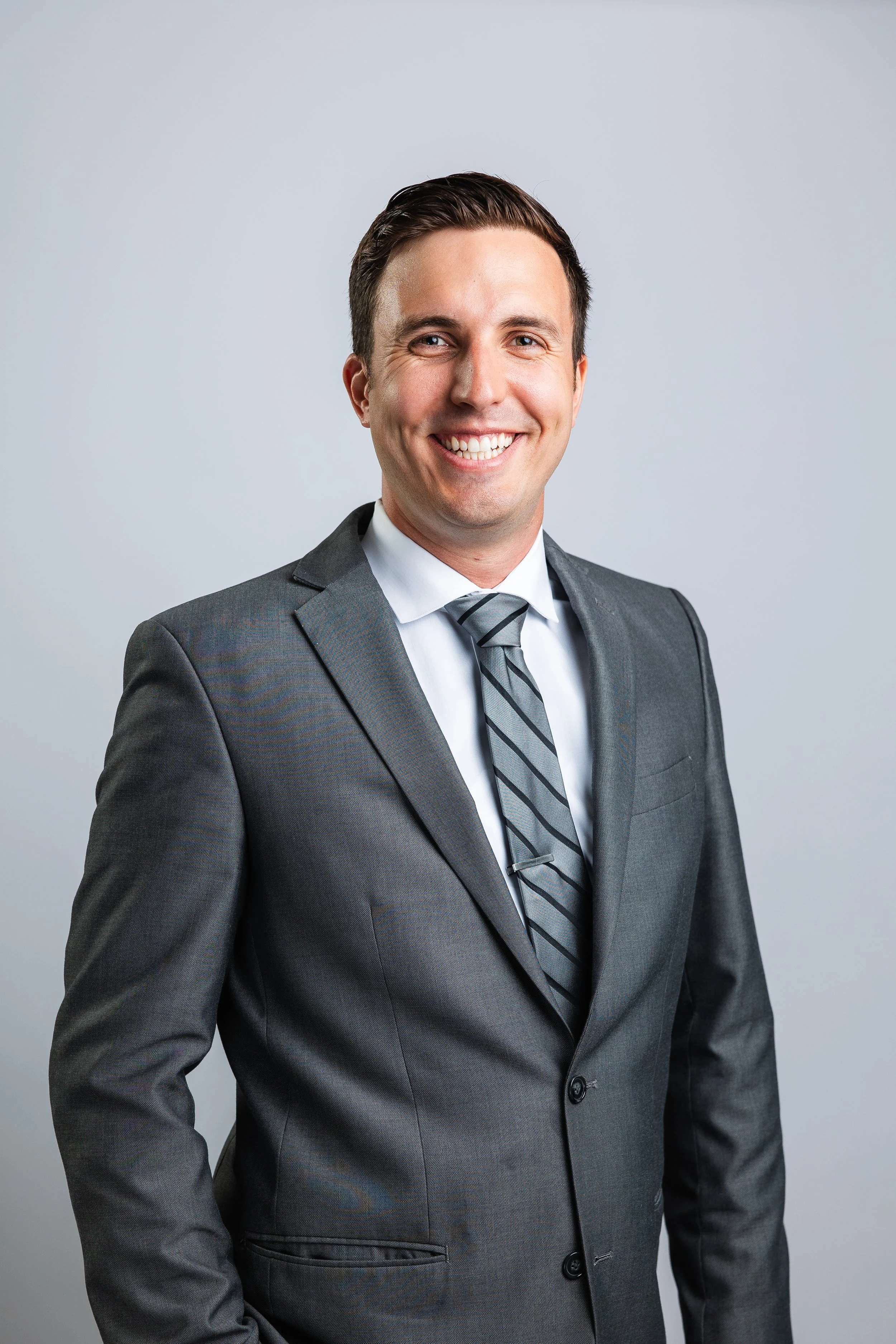
Marquette, Michigan-based startup Kall Morris Inc (KMI) provides a "tow truck" capability for space, designed to grab and secure unprepared, uncontrolled satellites or space debris. We sat down with CEO and co-founder Troy M. Morris to talk about KMI’s journey from Michigan to the International Space Station, the critical role of the Small Business Innovation Research (SBIR) and similar government grant programs, and the policy hurdles facing the next generation of aerospace innovators.
Tell us about your background. What led you to Kall Morris Inc (KMI)?
I am one of three co-founders, along with my younger brother, Austin Morris, and his freshman-year college roommate, Adam Kall. The company was born out of a shared recognition that the aerospace ecosystem has critical needs that weren't being met by the National Aeronautics and Space Administration (NASA) or established prime companies and manufacturers. We saw a gap in how the industry handled legacy satellites and orbital debris, and decided to make the change we wanted to see in the world. Our team has grown to 17, and we’ve even had our experiments run in the International Space Station by astronaut Sunita Williams.
What is the work you all are doing at KMI?
We have developed the capability to capture unprepared, uncontrolled satellites and are building “a tow truck for space.” If a satellite that tracks hurricanes runs out of fuel or suffers a mechanical failure, we can go up and rescue it, preventing a loss of vital communications or weather-tracking data.
Our main customers within the U.S. government include NASA, the Space Force, the Air Force, and the Defense Advanced Research Projects Agency. We also work closely with the national security community and commercial companies that rely on stable orbital services. Since space debris impacts everyone from telecommunications to global positioning, our end users are essentially any organization that provides or consumes space-based services.
How have federal grant programs shaped KMI’s growth and capital access?
Founded in 2019, we bootstrapped through the pandemic until we won our first three contracts in a single week in 2021. Those were Phase I Small Business Technology Transfer projects that we eventually converted into Phase II continuations. We are vocal champions of these programs.
The non-dilutive funding from these grants was pivotal; at one point, we brought in $4.7 million in grants, which allowed us to close a pre-seed round early and retain more equity in the company. We also utilized Michigan’s Emerging Technologies Fund matching program, which is a great example of how state-level support can amplify federal grants. Recently, the uncertainty surrounding SBIR reauthorization caused major issues, leaving the program's future in limbo, and creating a bottleneck for every small business trying to pursue long-term science.
What is your perspective on intellectual property and its role in attracting investment?
Our IP strategy combines exclusive licensing and trade secrets. We hold an exclusive license from the University of Southern California for some of the initial hardware work, and we are currently evaluating which of our new technologies to formally patent.
In the startup world, a patent is often only as good as your ability to afford to defend it. For us, the value of a patent is largely a signal to investors. We’ve seen investor interest increase significantly based on the scale of a company’s IP portfolio—one patent is a good start, two to three may not move the needle, but ten to twelve creates a meaningful shift in attention. They often want to see a portfolio that demonstrates your ability to lead to a profitable exit. It’s a necessary numbers game for scaling in such a high-stakes industry.
Are there any local, state, or federal startup issues that you think should receive more attention from policymakers?
The "valley of death" in funding needs more attention. There is an over-reliance on the idea that venture capital will fund all low-level innovation until the government is ready to be a customer, leaving many good ideas stranded. We need consistent government funding for science that doesn't get cut in half every time there’s a budget delay or a shutdown. Beyond aerospace, the logistical and financial burden of healthcare for small businesses is an ongoing frustration. Compared to our international colleagues, it’s embarrassing. Along with it being a massive time-suck for founders who should be focused on building their companies rather than navigating insurance logistics.
What are your goals for KMI moving forward?
By November 2027, we plan to launch our free-flying spacecraft to lift dead satellites, making the orbital environment safer. By 2030, we hope to have a dozen of these spacecraft available to act as "referees on the ice," protecting assets and managing debris. Growing our capability to ensure that space remains a sustainable and reversible environment. By improving the recovery process for orbital assets, we hope to improve the quality and reliability of services for everyone back on Earth.
All of the information in this profile was accurate at the date and time of publication.
Engine works to ensure that policymakers look for insight from the startup ecosystem when they are considering programs and legislation that affect entrepreneurs. Together, our voice is louder and more effective. Many of our lawmakers do not have first-hand experience with the country's thriving startup ecosystem, so it’s our job to amplify that perspective. To nominate a person, company, or organization to be featured in our #StartupsEverywhere series, email advocacy@engine.is.
