
#StartupsEverywhere: Deepak Arora, Founder & CEO, Wear-Tech
This profile is part of #StartupsEverywhere, an ongoing series highlighting startup leaders in ecosystems across the country. This interview has been edited for length, content, and clarity.
Life-saving, continuous monitoring for every day life
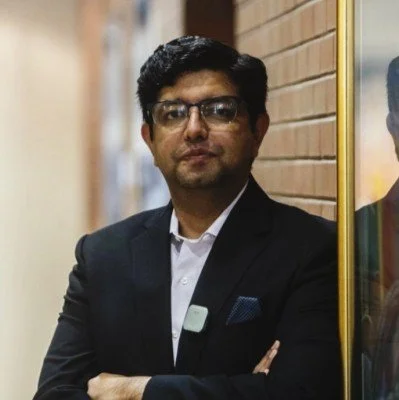
Deepak Arora founded Wearable Technologies Inc. (Wear-Tech) in the wake of a family tragedy. In researching prevention, he learned that certain age groups are underserved by current life-sign monitoring infrastructure. Deepak is working to solve that with his next-gen wearable smartwatches. We sat down with Deepak to talk about his company, the state of the patent application process, and more.
Tell us about your background. What led you to Wear-Tech?
Before I started Wear-Tech, I worked at IBM for 10 years. My last position at IBM was in Watson Health, where I learned about the intersection of AI and healthcare. Around that time, the unexpected happened in our lives—we lost one of our daughters, Mahi, to a drowning incident. We didn’t know where she was; we were looking around the house, but she had wandered outside, and we were five minutes too late.
I spent the next six months researching what could have prevented her drowning. I learned that drowning is the fourth leading cause of death for children under the age of five worldwide. It’s a silent public health crisis. So I decided to go back to school and get my MBA in Healthcare Leadership and figure out how to build the missing infrastructure in this space.
During my MBA program, I found that this lack of preventive care is more widespread across both ends of the age spectrum. I saw the opportunity to make a meaningful difference, so I founded Wear-Tech to make that a reality. We’ve started by focusing on wearables that support older adults as the world adapts to a significantly larger population of people over 75 than previous generations have experienced.
What is the work you all are doing at Wear-Tech? Who are your users/customers?
We are building a smart watch to help vulnerable populations receive the fastest care possible by providing caregivers with continuous monitoring and accurate accident detection. Anybody under the age of 5–and over the age of 75–is vulnerable to what are very preventable accidents like drowning and falls. Our patented watch does not require the wearer to program it, or connect it to other devices. Think of it like Life Alert on steroids. It has everything it needs already in it, all the user needs to do is charge it.
What makes our watch different is the use of AI. Similar products to ours stop working the moment the user leaves the home. Our AI–named on behalf of our daughter–Mahi, can keep up with new, unfamiliar locations and detect real accidents against false positives. Mahi contextually tracks the user’s whereabouts and, based on caregiver programmed geofencing, determines high-risk and low-risk areas while updating the caregivers appropriately.
You mentioned that the tech inside Wear-Tech’s watch is patented. What was your experience obtaining that patent?
The process was as rough as it could be. It took the U.S. Patent & Trademark Office 18 months to conduct its initial review of our patent application, and three years passed from the date we filed the non-provisional patent application to receiving the patent. Based on that experience and spending roughly $40,000, we have delayed filing another five patents knowing the cost and effort of the process versus managing the business. At this point, the Catch-22 is we want to protect our novel ideas, but we don't have the bandwidth or the time that it takes to protect them.
Wear-Tech participated in the National Science Foundation Innovation Corps (I-Corps). What did you learn from the program? What could have been done better?
We participated in both I-Corps Hubs and National Teams. The work we did at Hubs helped us reach our research outcomes. Hubs was relatively easier than National Teams, but the grant funding is very limited. You definitely get what you give in I-Corps; National Teams asks a lot more of its participants, but you get more in return. I wish we could go through it again, but the effort was monumental. It would have been more useful if I-Corps taught participants how to work with the common personas of relevant customers and provided some referrals, rather than leaving us to select all of our own outreach.
How does building a startup in Wisconsin compare to building on either coast of the U.S.?
So far, we’ve raised more than $3 million, all from in-state investors. Entrepreneurship doesn’t belong just on the East and West coasts. California has the wealth and an investor class that’s comfortable putting money into high-risk startups. States like Wisconsin are trying to build that. The tax credit here is a start, but it’s limited and the requirements are rigid. We could have gone out of state, but we wanted to build the story that a startup can get funded in its own ecosystem. We need to build up local ecosystems across the country and give investors outside the coasts incentive to invest.
Wear-Tech made its first acquisition in June when it acquired software from Vinovo Group LLC. Can you walk us through what motivated you to make an acquisition?
From the start, I’ve been very aware of supporting Wear-Tech’s growth trajectory. That means not only building an exceptional in-house product, but looking out beyond our company, and folding in ideas and technologies from other businesses. One such area was remote, continuous safety monitoring software for patients re-admitted to hospitals after recent, previous emergency visits. We were initially using this software from Vinovo as third-party software, but it made sense to acquire and fully integrate it into our operations instead of building it ourselves.
What are your goals for Wear-Tech moving forward?
I’d like to tap into the wellness space next year. Bundling physical and mental health in one space, understanding how the two interconnect, is very exciting for better outcomes of care.
All of the information in this profile was accurate at the date and time of publication.
Engine works to ensure that policymakers look for insight from the startup ecosystem when they are considering programs and legislation that affect entrepreneurs. Together, our voice is louder and more effective. Many of our lawmakers do not have first-hand experience with the country's thriving startup ecosystem, so it’s our job to amplify that perspective. To nominate a person, company, or organization to be featured in our #StartupsEverywhere series, email advocacy@engine.is.
