
#StartupsEverywhere: Sascha Mayer, Co-Founder and CXO,Mamava
This profile is part of #StartupsEverywhere, an ongoing series highlighting startup leaders in ecosystems across the country. This interview has been edited for length, content, and clarity.
Advocating for Parents: Designing Infrastructure for a Healthier Society
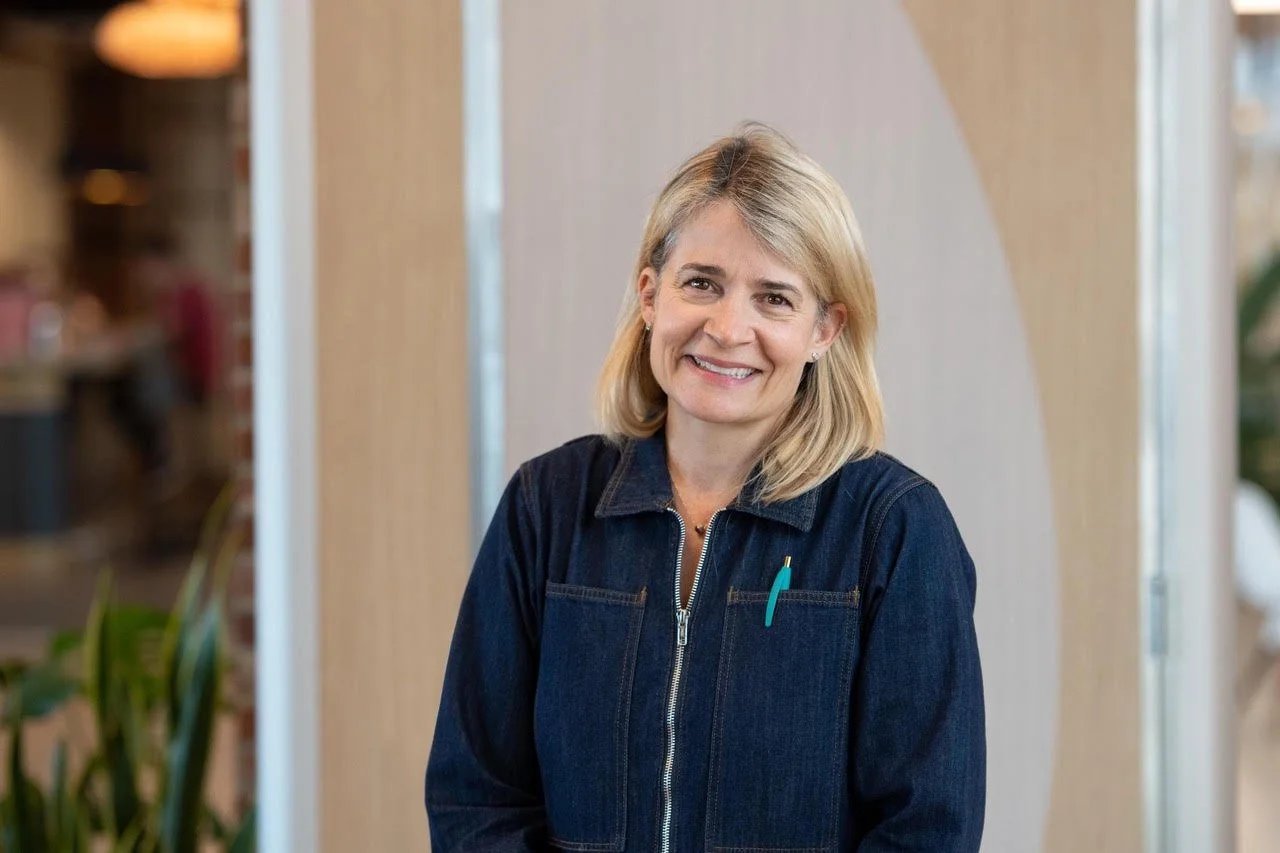
Sascha Mayer, Co-founder and Chief Experience Officer of Mamava, is closing the gap in support for breastfeeding parents with freestanding lactation pods. Based in Burlington, Vermont, Mamava provides private spaces in high-traffic areas like airports and workplaces, paired with a mobile app to help parents find them. We sat down with Sascha to discuss how design meets policy, the realities of U.S. manufacturing, and the importance of policy that supports parents.
Tell us about your background. What led you to found Mamava?
I studied Sociology at the University of Vermont, with my first job out of college working for Bernie Sanders when he was a congressman. I realized I was more of a private-sector person and transitioned to brand strategy at a design studio, where we came up with the concept for Mamava.
I was traveling, I had kids, and I wanted to breastfeed them, but I found myself constantly using my breast pump in restrooms because there just weren’t any private places to pump. The business case wasn't truly viable until the Affordable Care Act and, later, the Providing Urgent Maternal Protections for Nursing Mothers (PUMP) Act were passed, compelling businesses to comply. With good policy, we were able to build a successful business around maternal health intervention.
What is the work you are doing at Mamava?
We design lactation pods to provide breastfeeding parents a dignified space. It's a unique challenge because the moms and parents we serve don't generate revenue; they drive awareness. The facilities or HR departments that buy our pods are the ones that want—and typically now need—to provide private lactation spaces. We have to build the business around those buyers who might not be personally familiar with lactation, like the manager of a warehouse or a corporate HR person, while maintaining a relationship with the parents. Selling pods "keeps the lights on," but we are deeply mission-oriented toward the moms we serve.
What policy issues have you encountered when it comes to manufacturing the pods?
We are proud that we own our own factory in Springfield, Vermont. However, one of the interesting policy things that has frustrated us is this "Made in America" designation. If you went to our factory, you would see everybody working there and say, “This is a product made in America." But because of sourcing, for example, getting aluminum from Canada, we can't actually say that. We must use legal language, such as "assembled in America of domestic and imported parts." It's frustrating when we are competing with manufacturers who might be making everything in China, yet we don't look that different in terms of what we can claim on a label.
Similarly, we aren't allowed the "Women-Owned" designation because we are venture-backed. We deliberately brought on female investors to ensure a majority-female cap table, but current regulations disqualify us. It breaks my heart because my female co-founder is the CEO, and our executive team is almost all women. We are vastly women-owned in practice, but the venture backing prevents the official certification.
Tell us about the mobile app. What's the driving force behind it, and how is it used?
Very early on, we wanted to show impact, but we were only delivering a few pods a month. I hired an intern to scrape the Internet for public lactation rooms to create a database, and another to create a rudimentary map so moms could plan their trips. Today, the app complements the pods by not only helping users find our pods and lactation spaces, but by connecting to a smartlock on the door of many of our pods. Introducing a small amount of friction via a smart lock helps ensure that people are using the spaces the right way. But it also serves a deeper purpose: we integrated a "Words of Support" feature inspired by the notes moms left in lactation rooms. This allows users to leave words of support like "keep going" or "you're doing great" for the next parent. We are also about to launch a feature that connects users to a third-party virtual lactation consultancy through the app, to help raise awareness of those resources. We have several large clients with many employees that offer lactation resources as a benefit, but their employees don’t use or necessarily even know about that benefit– now they can find it on the Mamava app.
Are there any other local, state, or federal startup issues that should receive more attention from policymakers?
Paid family leave is the big one. Even though expanding paid family leave could impact demand for our product it makes sense for a healthy population. We view our pods as infrastructure, but we have to think of the social policies that strengthen our communities as infrastructure too. My co-founder has also been significantly involved with expanding accessibility to high-quality early childcare.
What are your goals for Mamava moving forward?
The business is expanding into a more wellness-focused space, which makes sense given the overlapping need for privacy and quiet. We are moving toward the idea of an "interior oasis", maybe for neurodivergent people, or someone who suffers from migraines, or needs to do a virtual medical appointment, or maybe for mental health breaks. We want to see where else we can go with the company to be helpful beyond just lactation.
All of the information in this profile was accurate at the date and time of publication.
Engine works to ensure that policymakers look for insight from the startup ecosystem when they are considering programs and legislation that affect entrepreneurs. Together, our voice is louder and more effective. Many of our lawmakers do not have first-hand experience with the country's thriving startup ecosystem, so it’s our job to amplify that perspective. To nominate a person, company, or organization to be featured in our #StartupsEverywhere series, email advocacy@engine.is.
