
#StartupsEverywhere: Alison Rogers Cove, Founder & CEO, USEFULL
This profile is part of #StartupsEverywhere, an ongoing series highlighting startup leaders in ecosystems across the country. This interview has been edited for length, content, and clarity.
Building Circular Waste Reduction Economies on Campuses
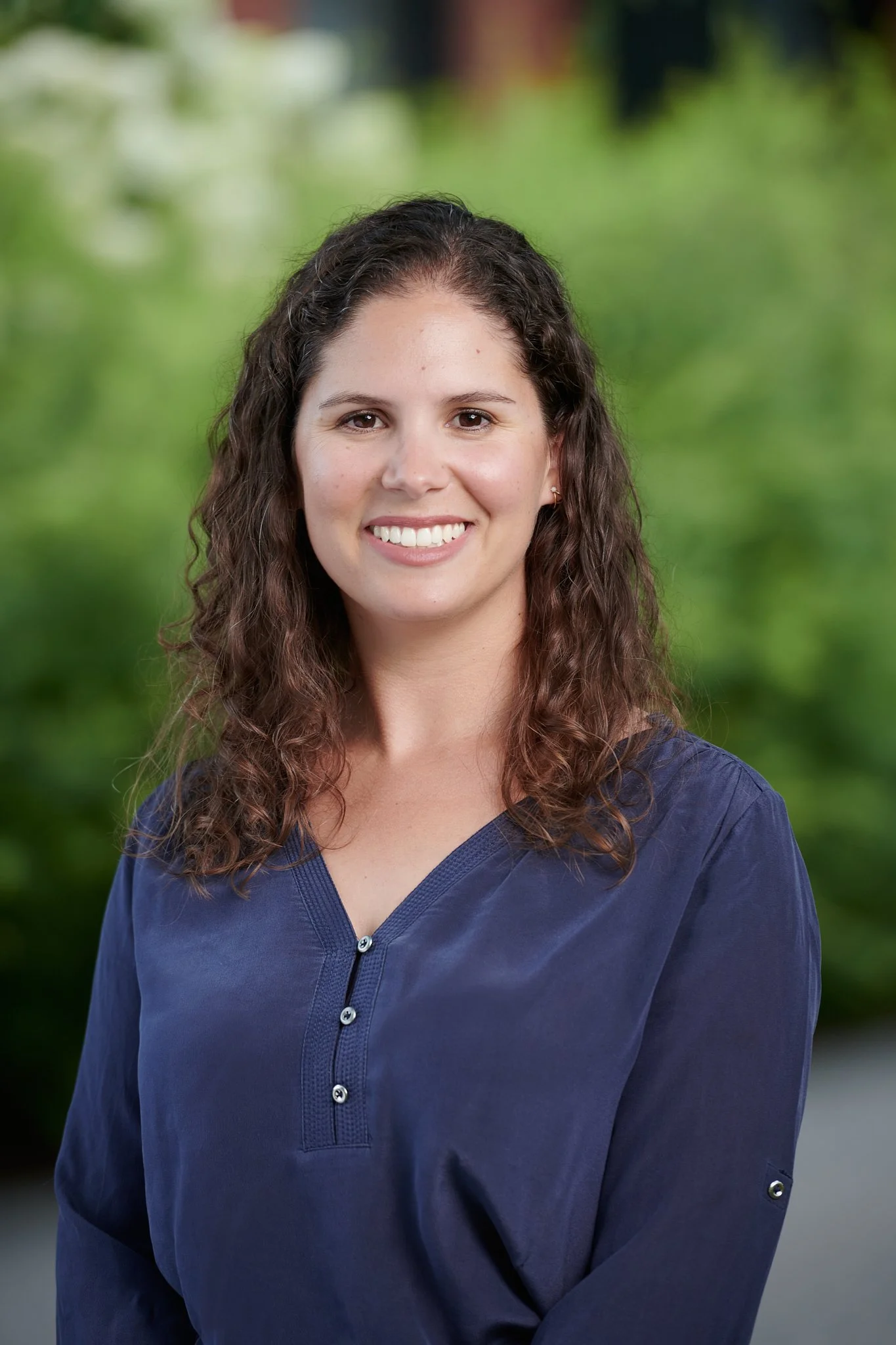
After a career in corporate sustainability, Alison Rogers Cove founded USEFULL, based in Boston, Massachusetts, to tackle the plastic crisis at the source. USEFULL is a circular solution focused on college campuses that helps them eliminate single-use food packaging by replacing it with a returnable, plastic-free system. We sat down with Alison to discuss the challenges of fundraising as a founder, the impact of tariffs on sustainable businesses, higher education as a market, and the realities of navigating parenthood while running a startup.
Tell us about your background. What led you to USEFULL?
When I started USEFULL, I had been examining my own habits regarding the personal waste I was creating and being exposed to, and knew I wanted to change that behavior in myself, and thought I could create a business to help others change as well. To start, I simply wanted to test whether people were comfortable with borrowing a coffee cup and reusing it. I ran my first series of pilots in 2018 and began expanding more broadly throughout Boston and the coffee shop network in 2020.
But in March 2020, the rug was pulled out from under me due to COVID-19. I was able to step back during COVID, examine what I had created, and think about a more practical approach, scalability, and markets truly in need of a solution around reuse. That's when we pivoted into higher education, launching at our first college in 2022 and growing steadily since then. Colleges and universities made so much sense for this next version of USEFULL; schools are ideal proving grounds for innovation as well as hubs for sustainability-driven research. And students really are an ideal end user; they are often sustainability-minded and health-conscious, and want a meaningful dining experience.
What is the work you all are doing at USEFULL?
We help campuses eliminate all their single-use food packaging, replacing it with our returnable, circular, plastic-free containers. You can think of us as a library system for takeout food packaging. Our reusable packaging is the default takeout option on campuses, both in dining halls and retail restaurants at schools, and we ultimately make it as easy as single-use and as easy to “throw away” as trash, in our case, returning containers and cups to disposal stations for cleaning and recirculation. The school gets to determine how long students can hang on to containers; most do so for two to seven days. If you are late, there is a $1.00 a day late fee, which is a proven method to drive better sustainability behavior. Data shows that less than one percent of our containers have ever been lost. Conversely, we recently replaced a plastic container system at the University of North Carolina Wilmington that was experiencing a 94% loss rate of its containers. On any given day, only about four percent of containers are even late. Our average usage period right now is 12 hours, so people are returning these quickly.
What has your fundraising journey been like?
To date, we have raised a series A, but fundraising has not been easy. I felt like I knocked on every door. I won pitch competitions, but they unfortunately have had little merit in finding real investors. An observation I made is that a whole bunch of the angel syndicates undertook deep due diligence, but then would only write $10,000 checks. For me, the return on investment wasn’t there for the time it would take to grow via angels and accelerators. It was incredibly frustrating to learn that angel groups were not beneficial to my fundraising journey.
Another point of frustration was my experience with people advertising a desire to invest in women, impact, or climate. To my surprise, that was a really challenging path to pursue. My admittedly cynical takeaway is that those people are "impact washing." Instead, I found investment from good old early-stage investors who just want to see a solid business model. Our lead investor is a Boston-based investment group; they are early-stage and high-risk, and they have a history of risk tolerance to back it up. They’ve been fantastic partners as we continue to scale, sharing a vision with us as we continue to grow.
How is the current landscape of higher education impacting your business?
Higher education is navigating a period of real transition, and that context absolutely shapes how decisions get made on campus. Colleges and universities are under increased scrutiny from affordability to enrollment to operational costs which means leaders are being cautious about where they invest. It's a difficult time to get people's attention, and I can’t blame them.
At the same time, higher ed remains one of the most powerful environments for innovation. These institutions are large and complex, but they’re also mission-driven and should be committed to sustainability, student health, and long-term impact. What we see is that when solutions clearly align with those priorities and deliver operational and financial value, they can still move forward even in constrained times, though that pace can be frustratingly slow.
Dining services, in particular, are under pressure to do more with less. When budgets tighten, we believe it becomes even more important to eliminate wasteful systems that don’t perform. That’s where reuse can be a strategic advantage and cost-saving program. But change is hard even if the status quo is inefficient and more costly.
While sustainability can be a differentiator for schools competing for students, faculty, and funding, it's been pushed aside a bit in today's climate. But plastic-free reuse can't just be a feel-good initiative anymore; it’s a way to demonstrate leadership and responsibility in a changing landscape. We continue to share that message while trying to move the entire dining ecosystem to a more sustainable place.
How have tariffs affected your operations?
We are plastic-free, which means we use stainless steel for our products. After issuing a nationwide request for proposals to find local suppliers a few years ago, it became apparent that a commodity like our containers was not a good fit for U.S. producers, who typically produce high-value, high-cost products, such as aerospace and medical devices. Even if we had found a manufacturer, U.S.-based stainless steel is sparse; it has to be imported.
As a result, we bought a significant amount of inventory in anticipation of the tariffs. While this impacted cash flow, we now have a deep set of inventory, which we need as we grow into larger and larger campuses. Overall, tariffs have been a distraction and investment for us. The good news is that we found a warehouse where we only pay tariffs when containers ship to our campus partners because of how the warehouse is structured.
What has it been like to be a mother and a startup founder?
In Massachusetts, we have paid family leave that covers up to $1,000 per week, which is a huge benefit. It's tough juggling a startup and a family. But having paid leave opportunities can really help startup founders. I'm fortunate to have started receiving a salary and have been receiving one for a few years, which has allowed me to pay into the Massachusetts paid family leave program. But had I not had a salary as a startup founder, I wouldn't have gotten anything. This is something for policymakers to consider.
Despite having paid maternity leave, it's still nearly impossible to step away as a startup founder. I have been working most days since giving birth.
Being a mom does make me double down on our mission. I want my daughter to grow up in a world where reuse is normalized, and plastics are much less of a threat to our health. Hopefully by the time she applies to college, plastic-free is one of the advantages the school uses to promote itself.
What are your goals for USEFULL moving forward?
At USEFULL, we’re focused on a plastic-free future. We are going to continue building and expanding our solution in higher education and other adjacent vertices. We are proud to have such fantastic partnerships, clients, and investors and are excited to keep making an impact together. From a strategy perspective, we’ll continue to work with vanguard schools that understand the dangers of mixing plastics and food. This will lead to broader awareness and adoption of reuse on campus, and critical areas like healthcare. While sometimes it feels like we keep shouting our “no plastic, no hassle” message everywhere, it's 1) a message worth shouting, and 2) the beginning of real change in how we treat our food packaging. USEFULL is more than ready to fight that fight.
All of the information in this profile was accurate at the date and time of publication.
Engine works to ensure that policymakers look for insight from the startup ecosystem when they are considering programs and legislation that affect entrepreneurs. Together, our voice is louder and more effective. Many of our lawmakers do not have first-hand experience with the country's thriving startup ecosystem, so it’s our job to amplify that perspective. To nominate a person, company, or organization to be featured in our #StartupsEverywhere series, email advocacy@engine.is.
